
You cannot control what happens to you. But can you control how you respond to it?
Every day, we spend an enormous amount of energy trying to control things that were never really ours to control.
What other people think of us.
Whether someone likes us.
What happens tomorrow.
Whether we succeed.
Whether someone appreciates our efforts.
How quickly our plans work out.
And yet, we worry about all of them.
The ancient Stoic philosophers had a surprisingly simple way of looking at this problem:
Separate what is up to you from what is not.
This idea sits at the heart of Stoicism. It does not tell us to stop caring about life. Instead, it asks us to become more precise about where our attention, effort, and emotional energy belong.
So, what is actually in your control?
The Stoic Dichotomy of Control
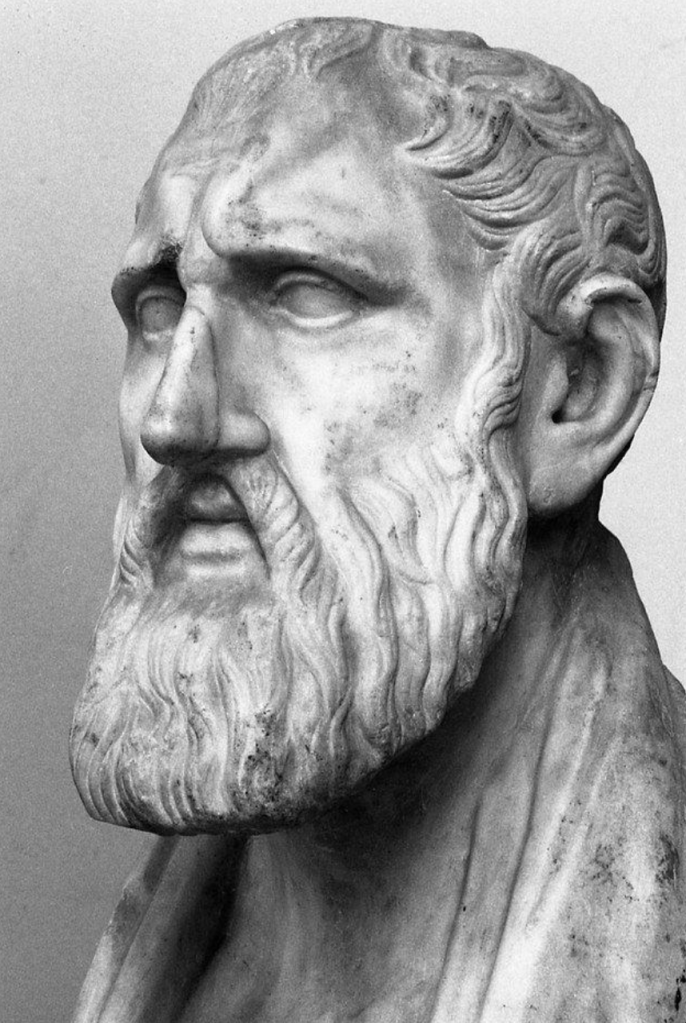
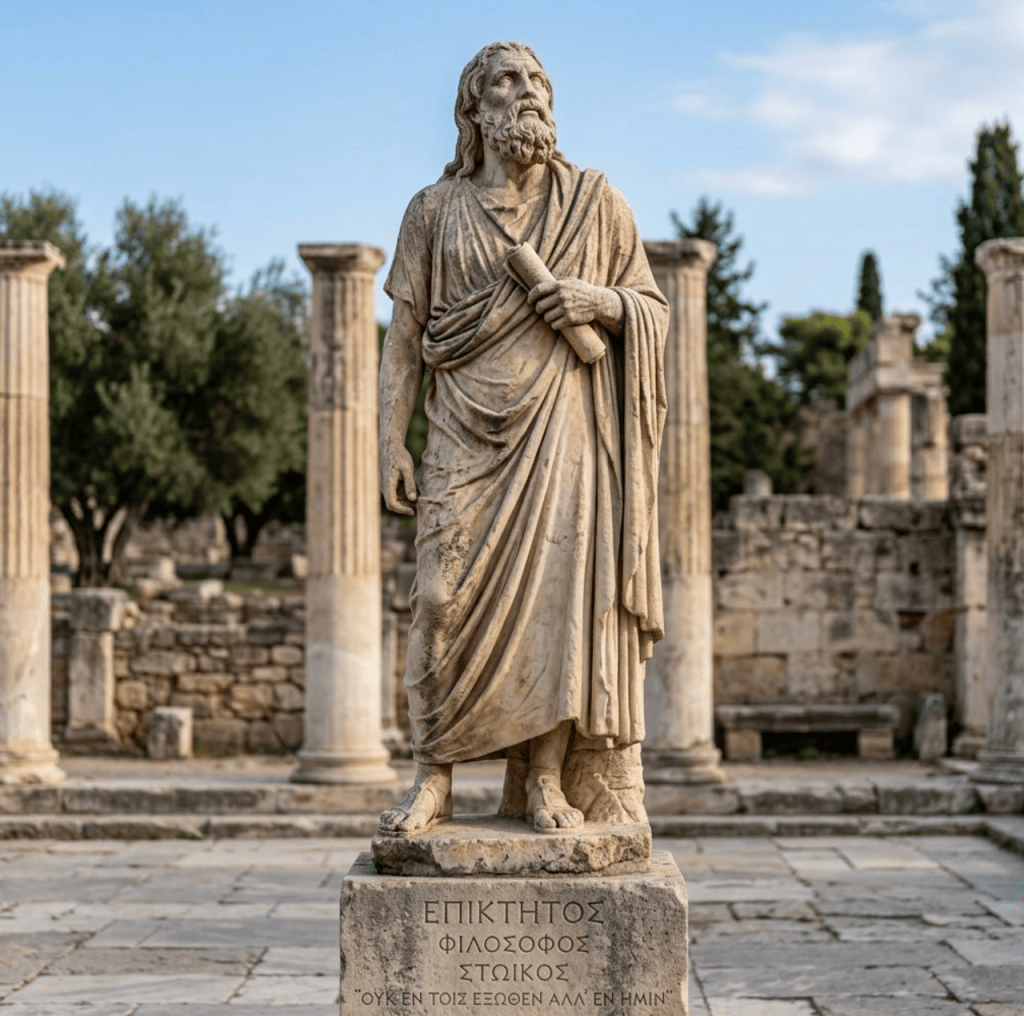
The Stoic philosopher Epictetus began his Enchiridion with a simple distinction:
“Some things are up to us and some things are not.”
That sounds obvious.
But think about how much of our daily stress comes from forgetting it.
Your actions are largely within your control.
Your choices are within your control.
Your effort is within your control.
Your judgments and responses are within your control.
But the final result?
Not completely.
Imagine preparing carefully for a job interview.
You can research the company.
You can prepare answers.
You can arrive on time.
You can communicate clearly.
You can put in your best effort.
But you cannot completely control whether the interviewer chooses you.
The outcome depends on factors beyond you: other candidates, the company’s needs, timing, budget, and decisions made by other people.
Stoicism asks you to put your energy into the first category rather than becoming consumed by the second.
And that distinction can change the way you live.
What Is Actually in Your Control?
The Stoics were not suggesting that everything about your life is controllable.
Quite the opposite.
They wanted you to recognize the boundaries of your control.
1. Your Actions
This is perhaps the most obvious part.
You can decide whether you study, exercise, practice a skill, apply for a job, apologize, or walk away from an unnecessary argument.
You cannot guarantee what these actions will produce.
But you can choose the actions themselves.
That is where your responsibility begins.
2. Your Decisions
Every day, you make choices.
Some are important.
Some are almost meaningless.
But your decisions are one of the areas where you have genuine influence.
You can choose whether to react immediately or pause.
You can choose whether to keep learning or give up.
You can choose whether to spend your evening scrolling endlessly or doing something meaningful.
You cannot control every circumstance.
But you can often control the next decision you make.
And sometimes, that is enough.
3. Your Effort
This is where Stoicism becomes particularly useful.
We often judge ourselves entirely by outcomes.
Did I get the job?
Did I get the promotion?
Did my business succeed?
Did people appreciate what I did?
But there is another question:
Did I genuinely give my best effort?
Effort is controllable.
Success isn’t always.
This doesn’t mean outcomes don’t matter. They obviously do.
It means that tying your entire sense of worth to an outcome you cannot fully control is a dangerous bargain.
4. Your Response
This is one of the most powerful Stoic ideas.
Something happens.
Then comes your interpretation of what happened.
Then comes your response.
There may be very little you can do about the first part.
But you have considerably more influence over the third.
Someone insults you.
You cannot control their words.
But you can decide whether to immediately retaliate, calmly respond, ignore them, or walk away.
You receive bad news.
You cannot erase the news.
But you can decide what you do next.
This doesn’t mean Stoicism expects you to become emotionless.
It means you don’t have to let every emotion become an action.
What Is NOT in Your Control?
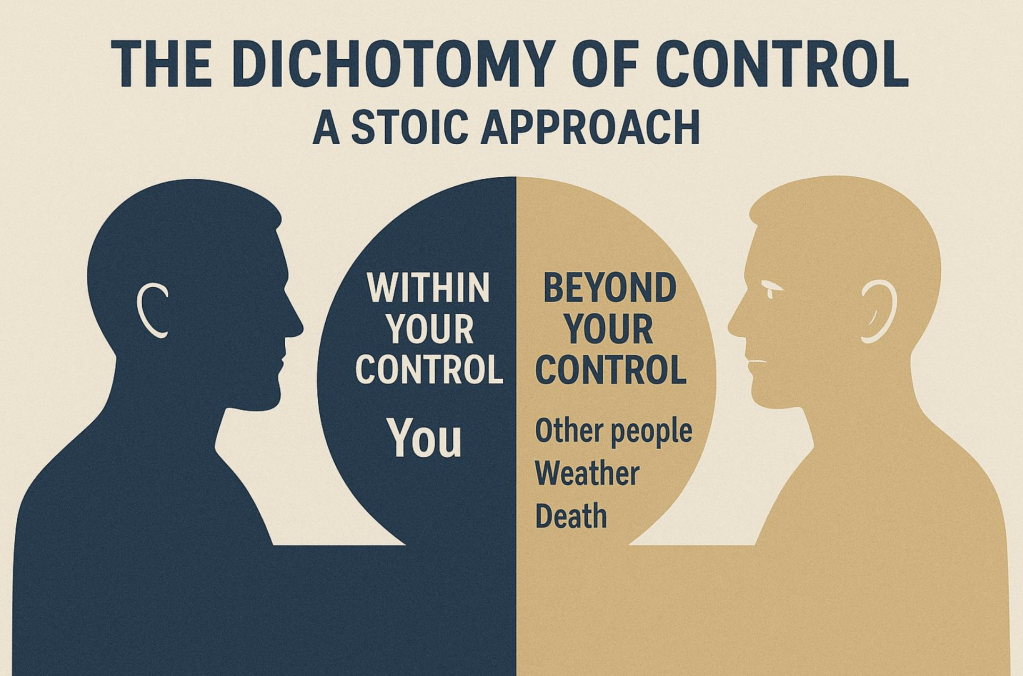
This is where the Stoic philosophy becomes even more interesting.
Many of the things we obsess over are outside our complete control.
Other People’s Opinions
You can behave honestly.
You can be kind.
You can do good work.
Still, someone might dislike you.
Someone might misunderstand you.
Someone might criticize you.
Someone might simply not care.
You cannot completely control another person’s perception of you.
Trying to do so can turn life into an endless performance.
You constantly adjust yourself to please an audience that may never be satisfied.
Stoicism offers another option:
Focus on the kind of person you choose to be.
The Past
You cannot go back and change what already happened.
You can regret it.
You can analyze it.
You can learn from it.
But you cannot rewrite it.
This is why reflection is useful while rumination is not.
Reflection asks:
“What can I learn from this?”
Rumination asks:
“Why did this happen to me?”
One looks for a lesson.
The other keeps reopening the wound.
The Future
The future is strange because we spend so much time thinking about something that doesn’t exist yet.
Planning for the future is useful.
Worrying endlessly about every possible future scenario is not.
You can prepare.
You cannot guarantee.
You can make plans.
You cannot control every variable.
The Stoic approach is not:
“Nothing will go wrong.”
It is closer to:
“If something goes wrong, I will deal with it when it arrives.”
That is a very different mindset.
Other People’s Choices
You can advise someone.
You can explain yourself.
You can encourage them.
But eventually, they make their own decisions.
Trying to control another person’s choices often creates frustration because you are attempting to exercise authority over something that does not belong to you.
You can influence people.
You cannot completely control them.
That distinction matters.
The Strange Freedom of Letting Go


At first, the Stoic idea can sound restrictive.
If you cannot control most things, doesn’t that make you powerless?
Actually, the Stoics believed the opposite.
Knowing what you cannot control can make you more powerful where you actually can act.
Imagine carrying a heavy backpack filled with things you cannot change:
Other people’s opinions.
Past mistakes.
Future uncertainty.
Other people’s decisions.
Random events.
Now imagine putting those things down.
You haven’t solved every problem.
But you have created space to deal with the problems that are actually yours.
That is the strange freedom of Stoicism.
You become less obsessed with controlling the world and more capable of governing yourself.
Does Stoicism Mean You Should Stop Caring?
No.
This is one of the biggest misunderstandings about Stoicism.
Stoicism is not saying:
“Nothing matters.”
It is saying:
“Care about what you can influence, while accepting what you cannot.”
A Stoic can care deeply about family.
They can care about their career.
They can care about society.
They can care about justice, friendship, health, and personal growth.
The difference is that they try not to confuse caring with controlling.
You can care about someone without controlling them.
You can care about success without believing success is guaranteed.
You can care about your health while accepting that illness can sometimes happen despite your efforts.
You can care about your future without demanding that reality follow your exact plan.
That is not indifference.
It is perspective.
The 10-Second Stoic Question
Here’s a simple exercise you can use whenever something is bothering you.
Stop and ask:
“Is this actually in my control?”
If the answer is yes, ask:
“What can I do about it?”
Then act.
If the answer is no, ask:
“What part of my response is still in my control?”
Then focus there.
For example:
“My manager criticized my work.”
Can you control what they said?
No.
Can you control whether you learn from the feedback?
Yes.
“Someone doesn’t like me.”
Can you control their feelings?
No.
Can you control whether you behave respectfully?
Yes.
“I made a mistake.”
Can you change the past?
No.
Can you correct the mistake and learn from it?
Yes.
“I’m worried about an upcoming interview.”
Can you guarantee the result?
No.
Can you prepare?
Yes.
The question doesn’t magically remove the problem.
It simply moves your attention from worry to action.
What the Stoics Were Really Trying to Teach
The deeper lesson isn’t simply about control.
It is about where you place your attention.
Your attention is limited.
Your time is limited.
Your emotional energy is limited.
If you spend all of it fighting things you cannot change, you have less left for the things you can.
Think about a person trying to push against a locked door for hours.
They may be working incredibly hard.
But the problem isn’t their effort.
They’re pushing in the wrong direction.
Stoicism asks you to stop pushing against locked doors.
Look for the door that actually opens.
Control Your Mind, Not the World
Modern life often encourages the opposite philosophy.
We are surrounded by messages telling us to optimize everything.
Optimize your career.
Optimize your body.
Optimize your productivity.
Optimize your relationships.
Optimize your appearance.
Optimize your future.
And gradually, we begin to believe that if we plan enough, work enough, and optimize enough, we should be able to control everything.
But life doesn’t work that way.
People change.
Plans fail.
Opportunities disappear.
Unexpected problems appear.
Things happen without asking for permission.
The Stoic response isn’t to stop trying.
It is to understand the difference between effort and control.
You control the effort.
You don’t always control the result.
And accepting that difference can make you calmer without making you passive.
A Stoic Way to Look at Failure
Failure is another area where this philosophy becomes useful.
Suppose you worked extremely hard for something and still failed.
There are two ways to interpret it.
The first is:
“I failed, therefore everything I did was meaningless.”
The second is:
“The result wasn’t what I wanted. What can I learn from what I controlled?”
Did you prepare properly?
Did you make the right decisions with the information you had?
Did you give the situation enough effort?
What could you do differently next time?
This doesn’t guarantee future success.
But it turns failure into information rather than a permanent judgment about yourself.
The Stoic Circle of Control
A useful way to visualize this philosophy is as three circles.
Inner Circle — What You Control
- Your choices
- Your actions
- Your effort
- Your values
- Your judgments
- Your response
Middle Circle — What You Can Influence
- Other people’s opinions
- Relationships
- Team outcomes
- Your reputation
- Certain opportunities
Outer Circle — What You Cannot Control
- The past
- Random events
- Other people’s final decisions
- The weather
- Death
- Many aspects of the future
The mistake we often make is spending most of our energy in the outer circle.
The Stoics would tell us to bring our attention back inward.
But There Is a Catch
There is an important nuance.
Very few things are completely within our control.
Even something like your actions can be affected by circumstances.
Your plans can be interrupted.
Your body can become tired.
Unexpected events can change your options.
So the Stoic idea is better understood as a practice of distinguishing influence from certainty, rather than pretending we have absolute control over ourselves and the world.
The goal isn’t perfect control.
The goal is better judgment about where your effort belongs.
Try This Tonight

Before you sleep, think about something that has been bothering you.
Write down three things:
1. What happened?
Describe it without exaggeration.
2. What was actually within my control?
Separate your actions from everyone else’s.
3. What can I do next?
Choose one action that is genuinely available to you.
Then let the rest go for tonight.
You may discover something surprising:
The problem itself hasn’t disappeared.
But your relationship with the problem has changed.
So, What Is Actually in Your Control?
Perhaps the Stoic answer is both simpler and harder than we expect.
You cannot control everything that happens.
You cannot control everyone around you.
You cannot control the past.
You cannot guarantee the future.
You cannot guarantee success.
But you can continually work on:
What you choose.
What you do.
How you respond.
How you interpret events.
What values you live by.
What you learn.
And maybe that is enough.
Because perhaps a good life isn’t about gaining complete control over the world.
Perhaps it is about becoming the kind of person who can remain steady even when the world refuses to cooperate.
That is one of the enduring lessons of Stoicism.
Control what is yours. Accept what isn’t. And don’t waste your life fighting reality.
 thecuriouscontext.com
Leave a comment