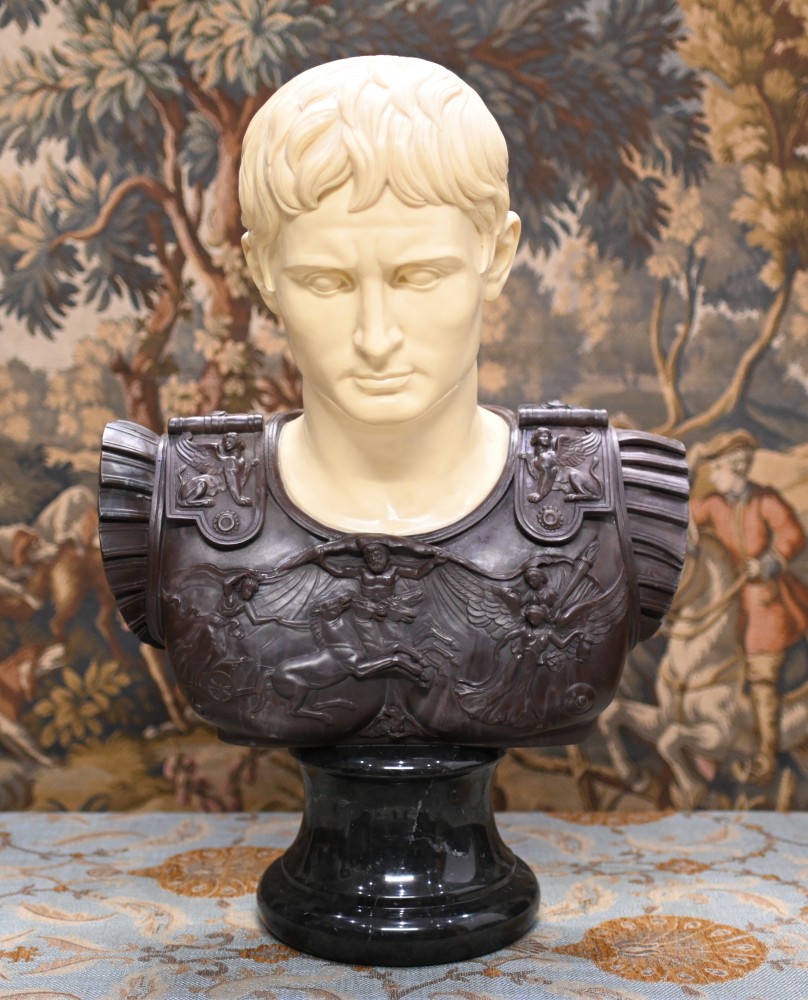
Story of Julius Caesar
A Curious Context Chronicle
There is a kind of man history cannot forget, no matter how many centuries try to bury him. He was born in Rome, in a house no grander than any other, yet he would die in a room the whole world still remembers.
His name was Gaius Julius Caesar. This is his story — not just of a man, but of power, love, betrayal, and the empire built from his blood.
I. The Climb
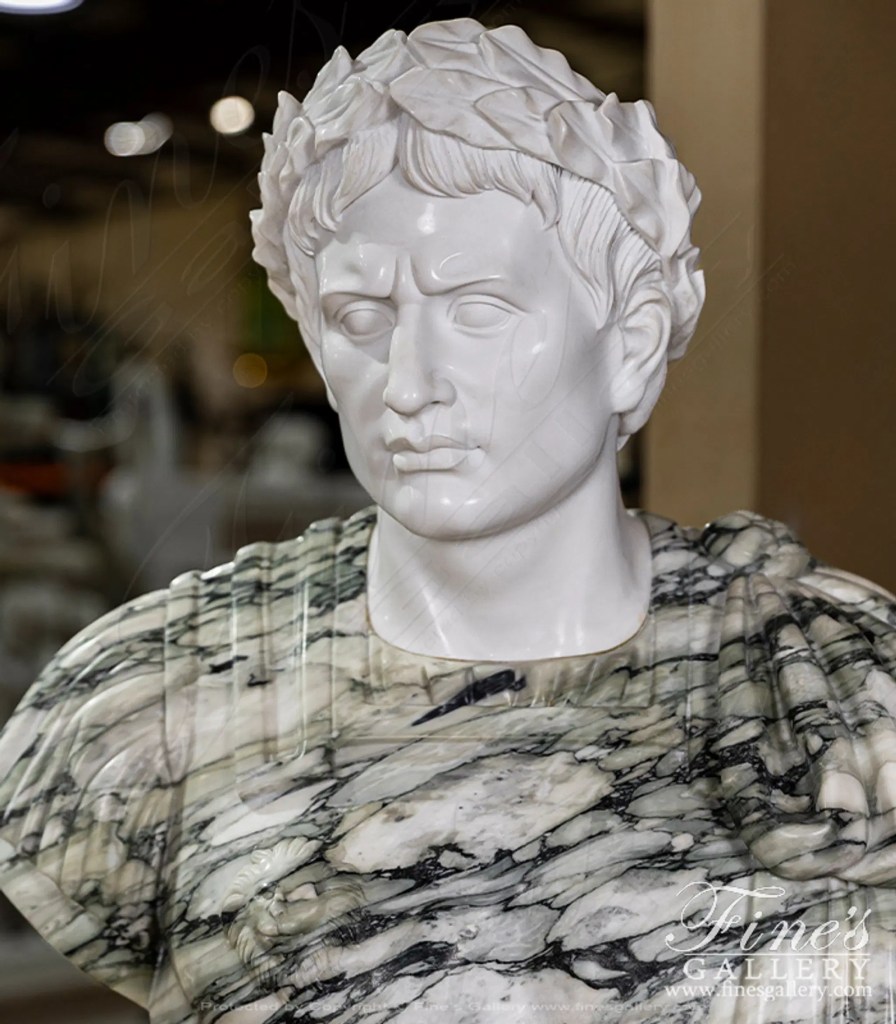
Rome was a Republic, proud and loud, ruled not by kings, but by a Senate crowd — old men in togas, clutching their reins, terrified of any man who dared outgrow his chains.
Caesar was born ambitious, sharp, and poor in coin but rich in charm. He borrowed money he didn’t have, spoke to crowds like a storm, and slowly, the people began to love him — not because he was born great, but because he made himself so.
He went to Gaul — a land of tribes and war — and there, he became a legend. Nine years of battle, a million lives shaped by his hand, until Rome’s borders stretched wide across the land.
But glory abroad breeds fear at home. The Senate watched him grow too bright, too loud, too loved — and ordered him to lay his army down and return as a lesser man.
Caesar refused.
At a small river called the Rubicon, he paused — one side was safety, obedience, silence. The other side was Rome itself, and war.
He crossed it.
“The die is cast,” he is said to have whispered.
Lesson: Power rarely announces itself with permission. It is taken by those willing to risk everything at the river’s edge.
II. The Queen Across the Sea
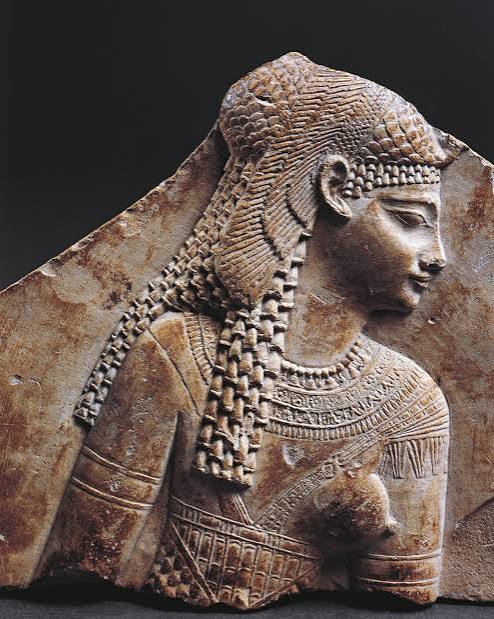
War brought him to Egypt, chasing a rival who had already been murdered before he arrived — his enemy’s head presented to him like a gift. Caesar, they say, did not smile. He wept. Even for a foe, he understood the weight of a life undone.
It was in the middle of this foreign grief that she came to him.
Cleopatra was twenty-one, fighting her own brother for her own throne, and she needed the most powerful man in the world to notice her — not as a conquered queen, but as an equal.
So she gambled everything on a single night. Legend says she had herself rolled inside a carpet, smuggled past guards and enemies alike, and unrolled it at his feet, breathless, unguarded, alone with him for the first time.
Caesar was fifty-two. He had seen empires rise and men die by his own hand. Nothing should have surprised him anymore. But here was a woman who did not tremble in his presence — who spoke to him not as a god, but as another mind sharp enough to match his own.
He fell for her completely.
They spent that winter together in Alexandria, the war outside forgotten for a while. He gave her back her throne. She gave him something rarer — a place where he wasn’t just “Caesar,” conqueror of Rome, but simply a man, undone by someone for the first time in years.
She bore him a son and named him Caesarion — “little Caesar.” When Caesar returned to Rome in triumph, he did something almost unthinkable: he invited her to follow him. She came, and lived openly in his villa across the Tiber, a foreign queen inside the heart of the Republic that hated the very idea of kings.
Rome watched with folded arms and narrowed eyes. They whispered that he meant to marry her, to move the capital to Egypt, to make himself a king with a queen at his side. None of it may have been true. But in Rome, a rumor cuts as deep as a blade.
He loved her in the open, at the exact moment Rome needed him to be humble. And love, unlike war, cannot be won by strategy alone.
Lesson: Love and power are rarely separate. But the world outside rarely forgives what it does not understand — and the people you love most can become the reason others turn against you.
III. The Ides of March
Caesar rose higher than any Roman before him — dictator for life, his face on coins, his statue placed among the gods.
To the people, he was a savior. To the Senate, he was a wound that would not close.
They feared he wanted to be king — a word Rome had hated for five hundred years.
The Warnings He Chose Not to Hear
Rome tried to warn him. Again and again, it did.
A soothsayer stopped him in the street weeks before and told him plainly: “Beware the Ides of March.” Caesar looked at the old man, and let it pass like wind through open windows.
The night before, his wife, Calpurnia, dreamed of him lying broken in her arms, his body running with blood, the roof of their home collapsing above them. She woke shaking and begged him not to go to the Senate the next morning. For once, Caesar almost listened — he nearly sent word that he was unwell.
But a friend — one of the very men plotting against him — came to his house that morning, smiled, and gently mocked the idea of a great man hiding from a dream. What would Rome think, seeing Caesar afraid of his wife’s nightmare?Caesar, proud until the very end, could not bear to be seen as fearful.
He got dressed. He walked to the Senate. On the way, a man pressed a scroll into his hand — a letter naming every conspirator, every detail of the plot, written by someone who knew and could not stay silent. Caesar folded it, unread, into the pile of papers under his arm, meaning to look at it later.
Later never came.
The Friend Who Held the Blade
Among the men waiting for him was Marcus Brutus.
Caesar had not just trusted Brutus — he had loved him, the way a man loves someone he sees a piece of himself in. Some even whispered, quietly, that Brutus might be his own son from an old affair with Brutus’s mother, Servilia, decades before. Whether or not it was true, Caesar treated him like one. When civil war split Rome and Brutus fought against him, Caesar forgave him anyway, welcomed him back, promoted him, trusted him with honor after honor.
If there was one man in Rome who would never lift a blade against him, Caesar believed it was Brutus.
That belief is what killed him.
The Fifteenth of March
They surrounded him in the Senate hall under the pretense of a petition, closing in slowly, the way wolves close in once they’ve decided the moment is right. The first blow came from behind, a knife catching him in the shoulder — a shock more than a wound. Caesar spun, grabbing at the man’s arm, shouting, fighting — this was still a soldier’s body, still a man who had survived a hundred battlefields.
But then more blades came, from men on every side, men he had called friends.
And then he saw Brutus step forward, blade raised.
It is said that in that moment, Caesar stopped fighting. Not because his body gave out — but because something inside him did. If Brutus too had turned against him, what was left worth protecting?
“Et tu, Brute?” — even you, Brutus? he is said to have whispered, quieter than a prayer, before he covered his face with his toga and let himself fall.
Twenty-three wounds in total. Only one of them was fatal. But it was Brutus’s blade that broke him before any of the others did.
He fell at the feet of a statue of his old rival, Pompey — as if fate itself had a sense of irony, watching the story come full circle.
Lesson: The greatest danger is rarely the enemy in front of you. It is the friend standing close enough to strike — and the warnings we are too proud to hear are often the ones that could have saved us.
IV. The Reckoning
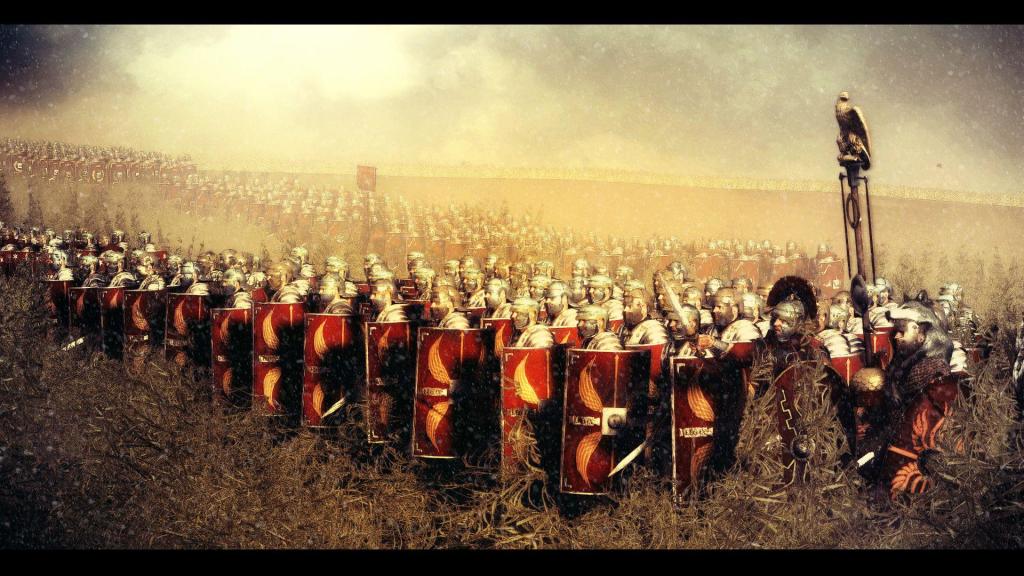
Caesar’s will was read, and Rome gasped. He had named an heir — not a general, not a senator, but his eighteen-year-old grand-nephew, Octavian, a young man few had taken seriously.
But blood is not the only thing that binds people to revenge. Mark Antony, Caesar’s most loyal general, a soldier who had bled beside him in war, burned with the same fury.
Octavian and Antony — an unlikely pair, one born to lead, one shaped by battle — joined forces with one goal: make the killers pay.
At Philippi, they hunted down Brutus and Cassius, the men who had struck Caesar down in the name of “freedom.”
The battle came in two brutal waves. In the first, Cassius’s forces were pushed back, and in the chaos and dust, he believed the war was already lost. Rather than be captured, he ordered his own freedman to drive a sword through him — dying on his own birthday, without ever knowing that his side had actually won that first clash.
Brutus fought on, leading the remaining conspirators for weeks more, haunted, it is said, by a ghost that visited his tent at night and told him they would meet again at Philippi. He did not sleep easy after that.
When the second battle came, it was Antony’s and Octavian’s forces that broke him. Surrounded, his army scattered, his cause collapsing exactly the way Caesar’s murderers had once promised Rome it would be saved, Brutus understood there was no honorable way out.
He did not wait to be dragged back to Rome in chains, paraded through the streets he once tried to protect from a king. He turned to his few remaining friends and asked one of them to hold the hilt of his sword steady — and he ran onto the blade himself, choosing his own ending rather than let his enemies choose it for him.
It is said his last words were not of hatred, but of sorrow — a quiet admission that he had believed he was saving Rome, and instead had only broken it further.
Antony, when he found Brutus’s body, did not celebrate. He is said to have covered it with his own purple cloak and given it a proper funeral — one soldier honoring the courage of another, even as an enemy.
The men who killed Caesar to save the Republic ended up destroying themselves trying to defend the very idea they died for.
Caesar’s blood was avenged.
But peace between allies bound only by revenge never lasts long.
Lesson: Revenge can unite even rivals for a moment — but shared grief is not the same as shared vision.
V. Two Men, One Throne
With their enemies dead, Rome now belonged to two men — Octavian, calculating and patient, ruling the West, and Antony, passionate and proud, ruling the East.
And in the East, Antony met the queen who once loved Caesar.
Cleopatra.
History repeated itself, but this time, the flame burned even hotter. Antony fell for her completely — abandoning Roman customs, declaring their children heirs to lands that were not his to give, even divorcing his Roman wife, who happened to be Octavian’s own sister.
Rome watched in outrage. Octavian did not need to force a war — Antony and Cleopatra practically handed him the reason for one.
Octavian painted them not as lovers, but as traitors — a Roman general seduced by a foreign queen, plotting to move Rome’s throne to Egypt itself.
Lesson: A story, told the right way, can be more powerful than an army. Perception often decides wars before the first blow is struck.
VI. The Battle for Rome’s Soul
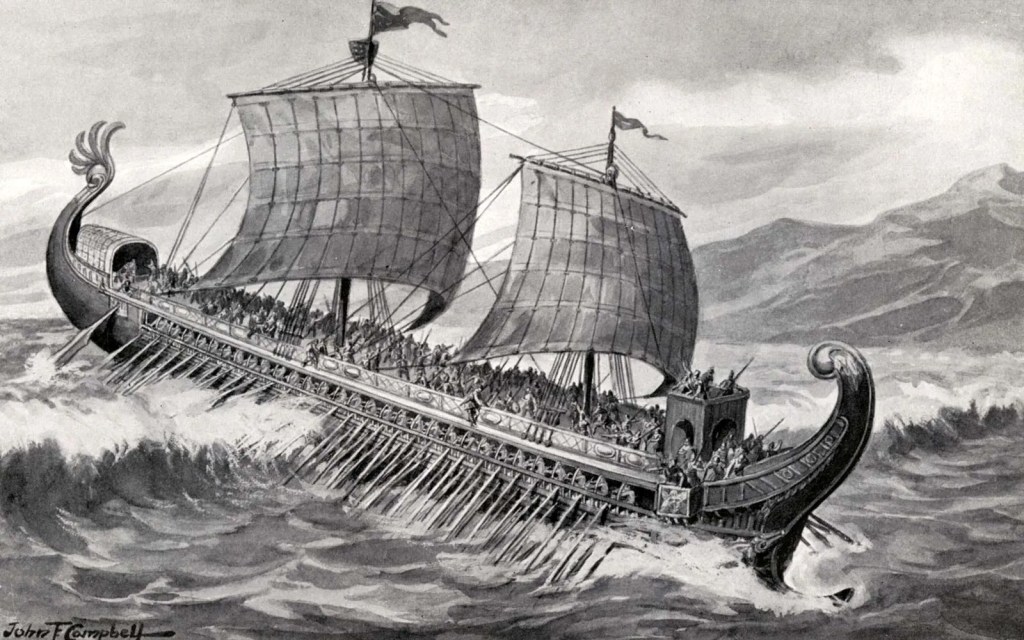
At Actium, in 31 BCE, the two sides finally collided — not just armies, but two visions of what Rome could become.
Antony and Cleopatra’s fleet was strong, but Octavian’s general, Agrippa, outmaneuvered them at sea. In the chaos, Cleopatra’s ships withdrew, and Antony, torn between duty and love, followed her instead of his men.
It was the beginning of the end.
Alexandria fell not long after. Antony, believing Cleopatra already dead, fell on his own sword. Cleopatra, refusing to be paraded through Rome in chains, chose her own ending rather than let Octavian choose it for her — legend says an asp, hidden in a basket of figs, delivered her final breath.
Two of history’s most powerful lovers, undone not by weakness, but by a war they could not out-love.
Lesson: Even the strongest bonds cannot always shield us from the consequences of the battles we choose to fight.
VII. The Birth of an Empire
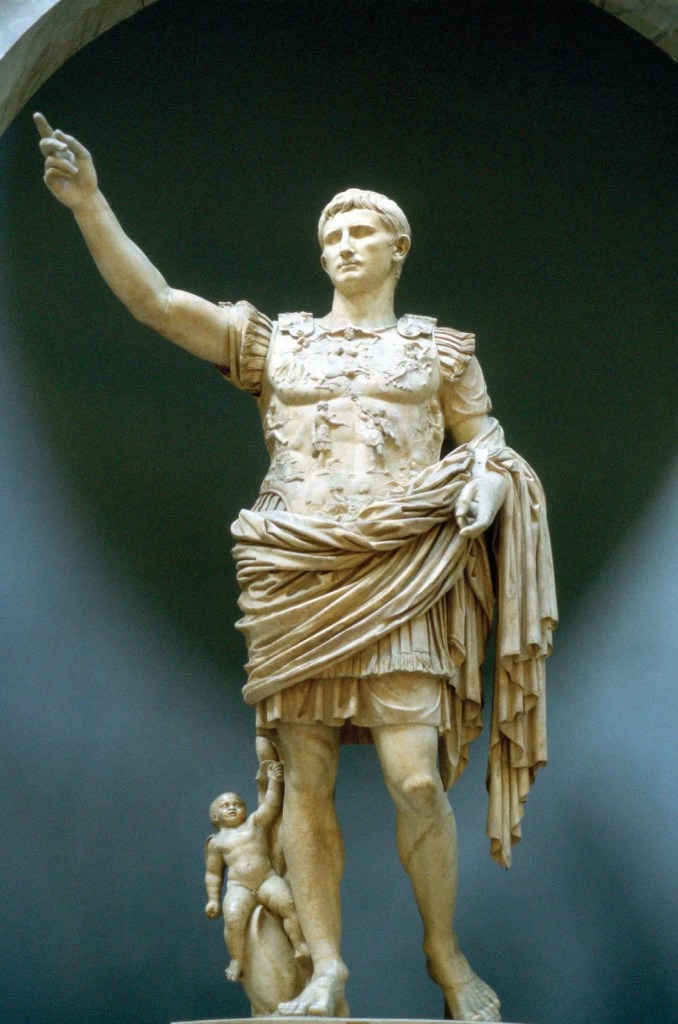
Octavian stood alone now — the last man standing from a chain of betrayal, revenge, and war that began on the Senate floor.
But he was wiser than to call himself a king. He remembered what happened to men who reached too openly for that word.
Instead, he offered his power back to the Senate — a calculated, humble gesture — and the Senate, grateful and exhausted from decades of war, gave it right back to him, along with a new name:
Augustus — “the revered one.”
Rome was still called a Republic in name, but in truth, one man now held it all.
The Republic that Caesar had once threatened had quietly become the Empire Caesar never lived to rule.
Lesson: Sometimes the ones who win are not the loudest in their ambition, but the most patient in their pursuit of it.
Epilogue: What Rome Remembers
Julius Caesar never wore a crown, yet his name became the word for emperor itself — Kaiser, Tsar, Caesar — echoing across centuries and continents.
He rose by daring what others feared. He loved a queen the world refused to accept. He was struck down by the very hands he trusted. And in his death, he set in motion a war that would end the Republic and birth an Empire.
Power, love, betrayal, revenge, war, and legacy — Caesar’s story holds them all, which is perhaps why, two thousand years later, we are still telling it.
Final Lesson: Every empire, every legacy, is built on choices made by people no different from us — ambitious, flawed, loving, and afraid. History does not belong to the gods. It belongs to those willing to write it, one decision at a time.
Curious Context — where history reads like it was meant to be felt, not just remembered.


Leave a comment