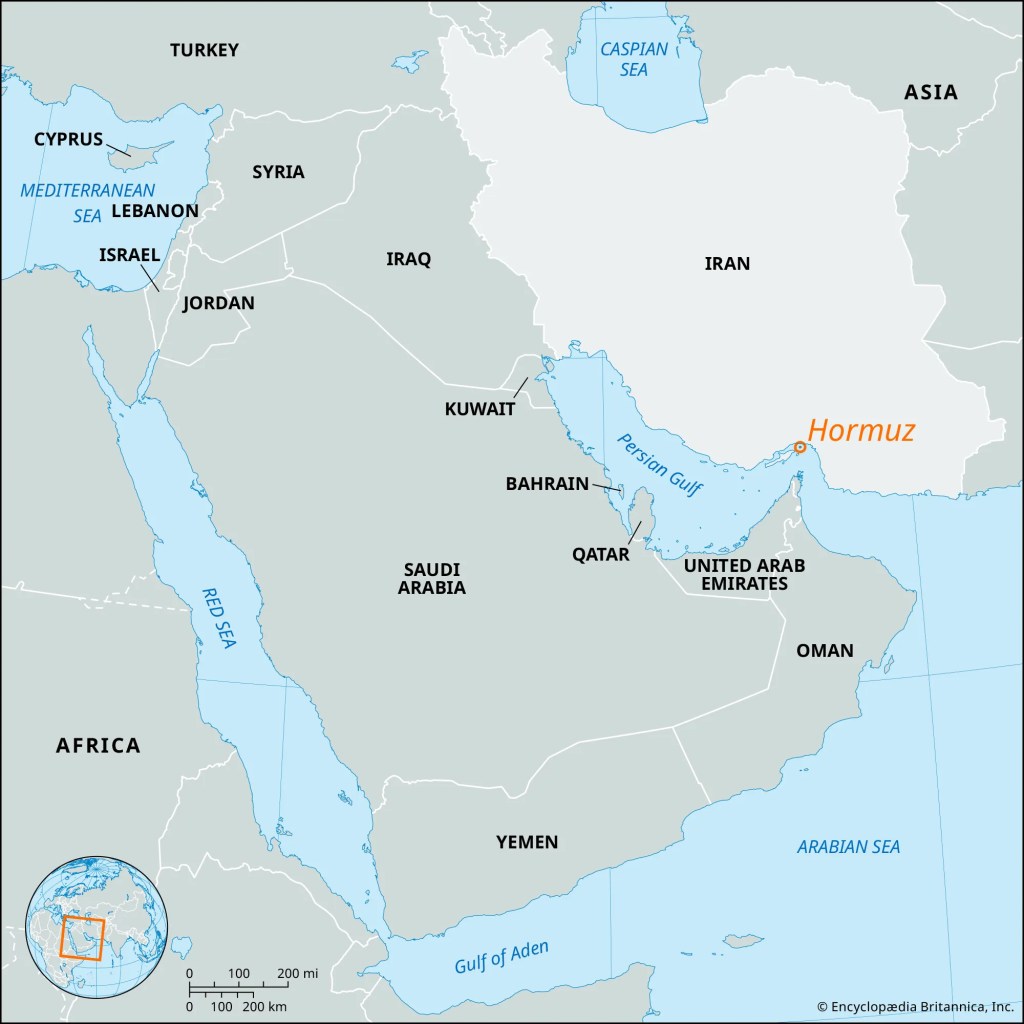
If you’ve glanced at the news lately, you’ve probably seen the phrase “Strait of Hormuz” attached to words like strikes, tankers, and ceasefire on the brink. It sounds technical and far away — but this one waterway has an outsized grip on your daily life, from the price of gas to how nervous the stock market feels this week.
What exactly is the Strait of Hormuz?
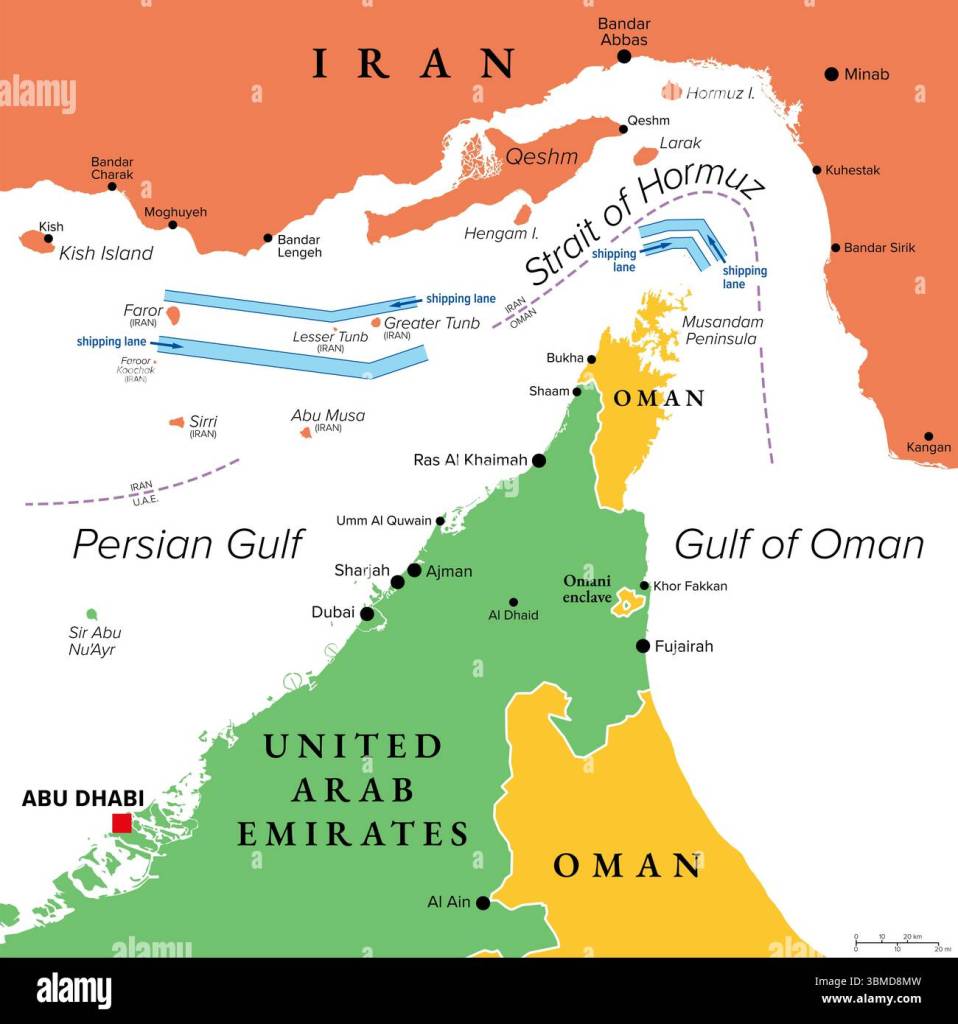
Picture the Persian Gulf as a bathtub. The Strait of Hormuz is its drain — a narrow channel, only about 21 miles wide at its tightest point, connecting the Gulf to the open ocean. Iran sits on one side; Oman and the UAE sit on the other.
Nearly a fifth of the world’s oil and a fifth of its liquefied natural gas pass through this single chokepoint on their way to refineries and power plants around the globe. There is no easy detour. If ships can’t get through, that energy has to find another (slower, costlier) route — or it doesn’t move at all.
How did we get here?
The current crisis traces back to a war between the United States and Israel on one side and Iran on the other, which began in February 2026. When the fighting started, Iran didn’t just fire missiles — it effectively shut the strait, boarding and attacking commercial ships and laying sea mines. Since roughly a fifth of the planet’s oil normally flows through here, tanker traffic collapsed almost overnight, and fuel shortages started rippling across Asia.
After weeks of fighting, the US and Iran reached a ceasefire in April, and in June the two governments signed a memorandum of understanding meant to formally end the war and reopen the strait.
So why is it back in the news?
Because that June agreement left one crucial question unanswered: who actually controls the strait now?
The US wants Hormuz to go back to being what it always was — an open international shipping lane that any country can use freely. Iran, on the other hand, sees control of the strait as leverage it earned during the war, and it wants ships to travel only along routes it approves — with talk of eventually charging tolls to pass through.
That disagreement has repeatedly boiled over into violence:
- In early July, Iran’s Revolutionary Guard attacked several commercial tankers in the strait.
- The US responded with rounds of airstrikes on Iranian military targets — missile sites, naval assets, and radar stations — and revoked a license that had allowed Iran to legally sell its oil.
- Iran retaliated with strikes on US-linked bases in the region.
- U.S. President Trump publicly declared the ceasefire “over,” then walked that back within a day, saying he still hoped for a negotiated solution.
Mediators from Oman, Qatar, and Pakistan have been shuttling between both sides trying to keep talks alive, but as of now, most large ships are avoiding the safer coastal route through the strait altogether, unsure of what “safe passage” even means this week.
Why should someone outside the Middle East care?
Three reasons:
1. Oil prices. Every time tensions spike, oil prices jump — Brent crude rose more than 5% in a single day after the early-July tanker attacks. That eventually shows up at your local gas pump and in the price of anything shipped by truck or plane.
2. Global trade. A fifth of the world’s oil and LNG isn’t a niche detail — it’s enough to strain energy supplies well beyond the Middle East, pushing some countries (notably in Europe) to lean more heavily on alternative suppliers like Russian gas shipments, even as they try to reduce that dependence for unrelated political reasons.
3. It’s a live test of how wars actually end. A ceasefire on paper doesn’t automatically mean peace on the ground. The Hormuz standoff is a real-time example of how vague language in a peace agreement — like who gets to “administer” a shared waterway — can become the very thing that reignites a conflict.
What happens next?
Nobody can say for certain, but there are three broad paths:
- A negotiated fix: Oman has floated a proposal to manage traffic through the strait in a way both sides could accept. If mediators succeed, shipping could normalize and oil prices could settle back down.
- An uneasy standoff: Strikes continue in bursts, ships keep rerouting or moving cautiously, and the region lives with elevated risk without a full return to open war.
- Renewed escalation: If either side feels cornered, the “ceasefire” label could become meaningless in practice, dragging in more countries and further disrupting energy markets.
The takeaway
The Strait of Hormuz is a reminder that geography still shapes geopolitics. A 21-mile-wide channel of water can move oil prices, strain alliances, and decide whether a fragile ceasefire holds — because whoever controls that stretch of sea has real leverage over how the modern world runs on energy.


Leave a comment