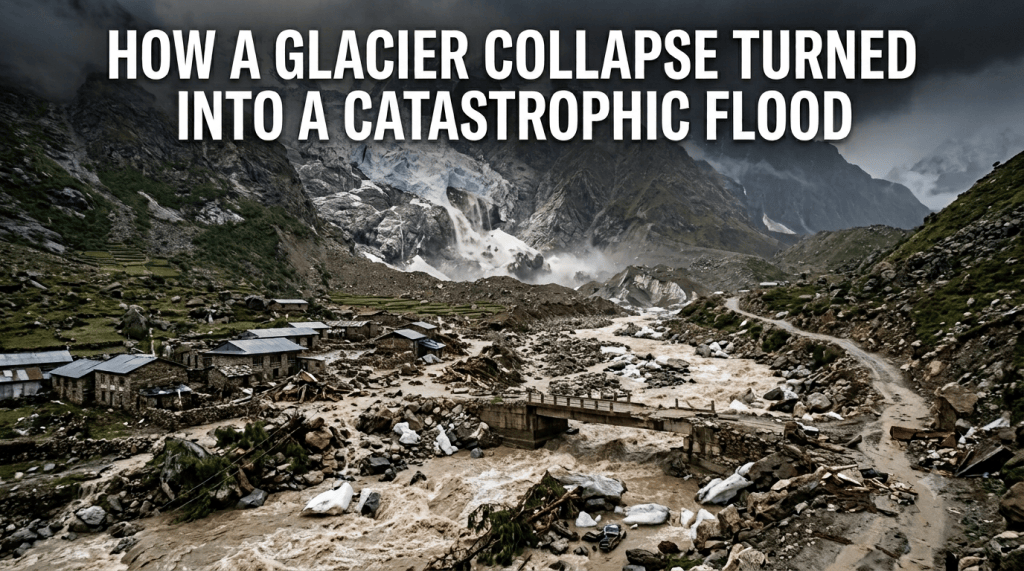
On August 26, 2026, a devastating flash flood struck the Nepal–Tibet border region. But this was not simply another monsoon flood. The disaster appears to have begun high in the Himalayas, where a massive collapse of ice and rock sent a destructive mixture of water, mud and debris racing downstream.
When people hear the word flood, they usually imagine days of heavy rain causing a river to slowly rise.
What happened in the Himalayas was very different.
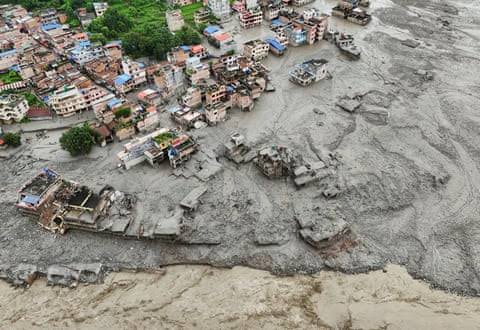
In a matter of minutes, a huge volume of material came crashing down from the mountains and into the river system. The resulting surge travelled through narrow Himalayan valleys, destroying roads, bridges, homes and other infrastructure along the way.
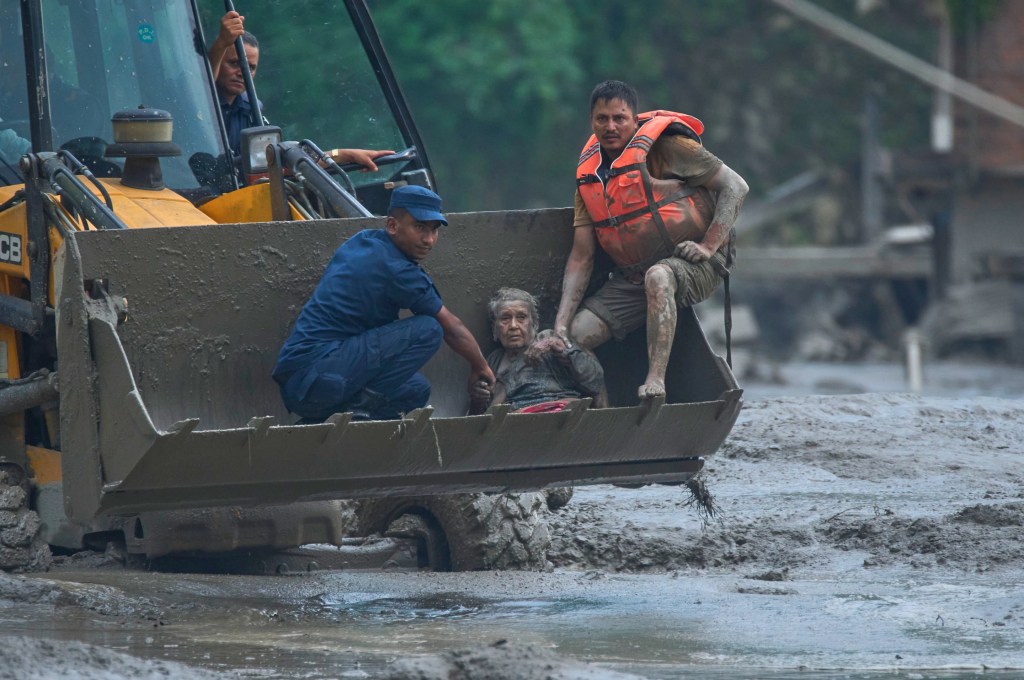
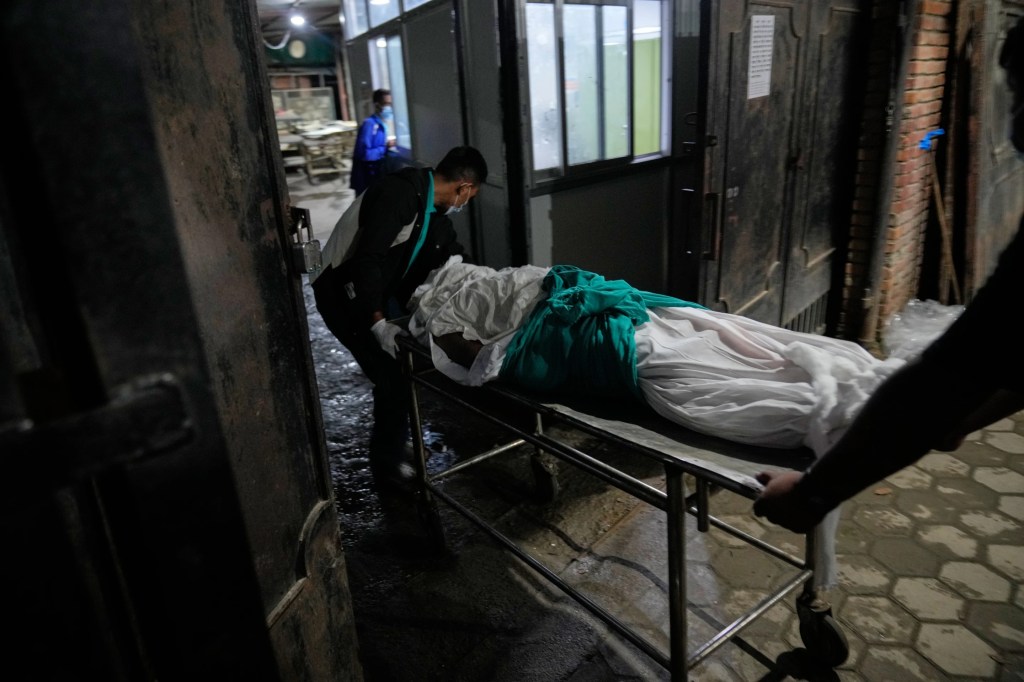
As rescue operations continue, the disaster has left hundreds dead and thousands missing across Nepal and Tibet.
But what exactly happened?
And how can a glacier help create a flood powerful enough to transform an entire river valley?
What Happened in Nepal?
The disaster began on August 26, 2026, in the high Himalayan region near the Nepal–Tibet border.
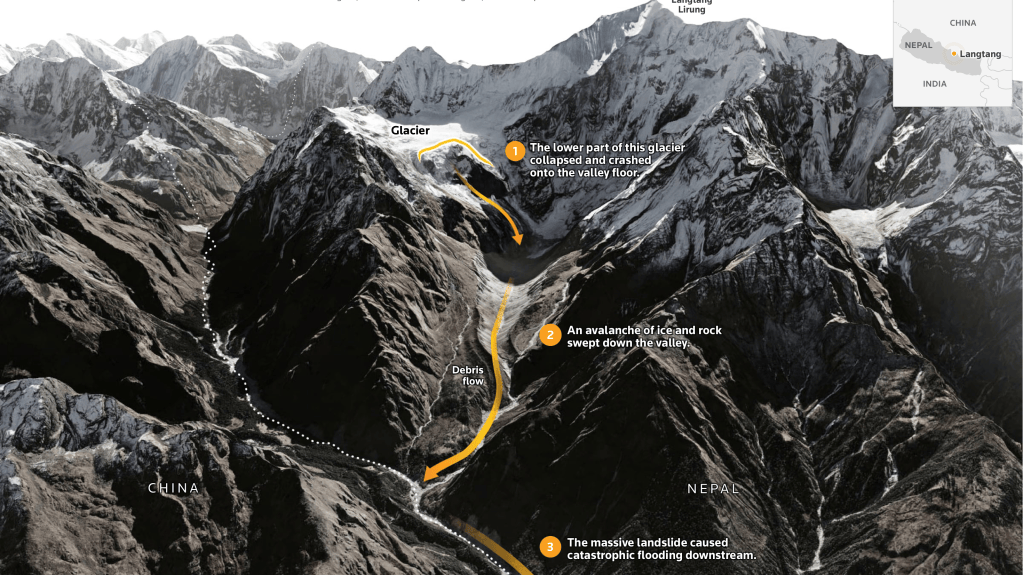
The affected area is connected to the Bhote Koshi River system, which flows through some of the steepest and most rugged terrain in Nepal.
Early reports initially raised questions about whether an earthquake or a sudden release of water from a glacial lake had caused the disaster.
Scientists investigating the event, however, found evidence pointing toward a different explanation: a large collapse involving glacier ice and rock, which produced an enormous debris flow and sent a sudden surge downstream. The seismic signal detected during the event was itself associated with the collapse rather than being the cause of it.
That distinction is important.
The disaster did not simply happen because a river received too much rain.
Something happened high in the mountains first.
And then gravity did the rest.
How Can a Glacier Cause a Flood?
To understand the disaster, it helps to think of a glacier as more than just a giant block of ice.
A glacier is a huge, slowly moving mass of ice sitting on top of a mountain landscape. As it moves, it interacts with the rock beneath and around it.
In a steep and unstable Himalayan environment, a collapse can involve much more than ice.
Imagine a massive section of mountain suddenly breaking apart.
Ice falls.
Rock falls.
Snow and sediment are swept along.
Water is added to the mixture.
All of this can combine into a rapidly moving debris flow.
Instead of a normal river carrying water, you suddenly have a moving mixture of water, mud, ice, rocks and other debris.
That makes the flow much heavier and more destructive.
Think of it this way:
Glacier/rock collapse
↓
Ice + rock + sediment rush downhill
↓
Debris enters the river system
↓
Water and debris accelerate through steep valleys
↓
Flash flood and debris flow spread downstream
↓
Communities and infrastructure are hit with enormous force
This is one reason Himalayan floods can be particularly dangerous.
The mountains provide the floodwater with a huge amount of gravitational energy.
Why Was the Flood So Destructive?
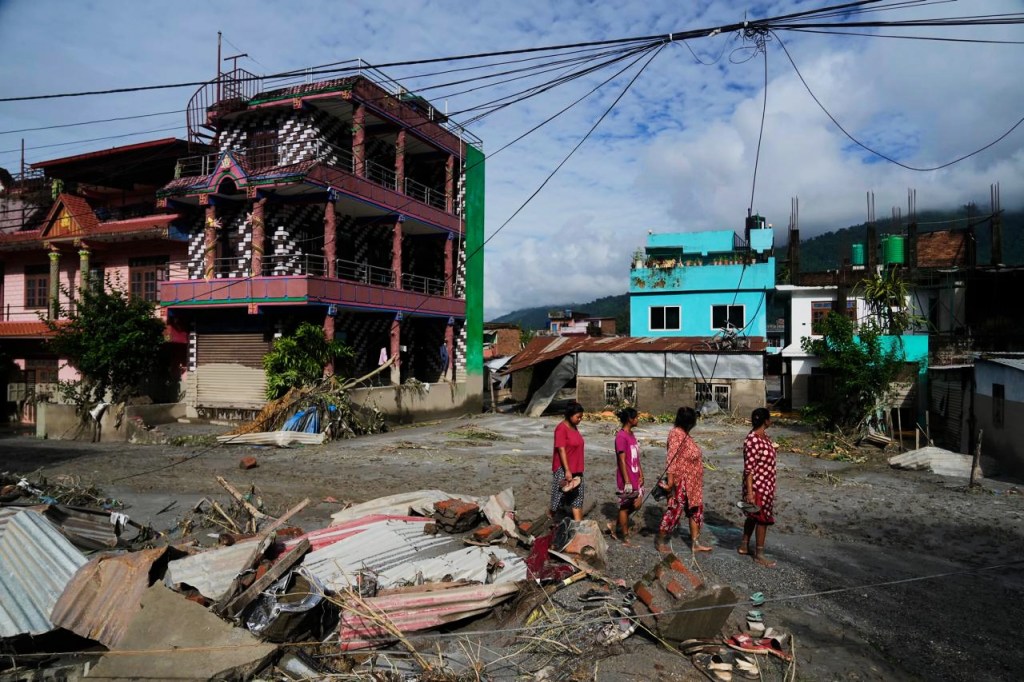
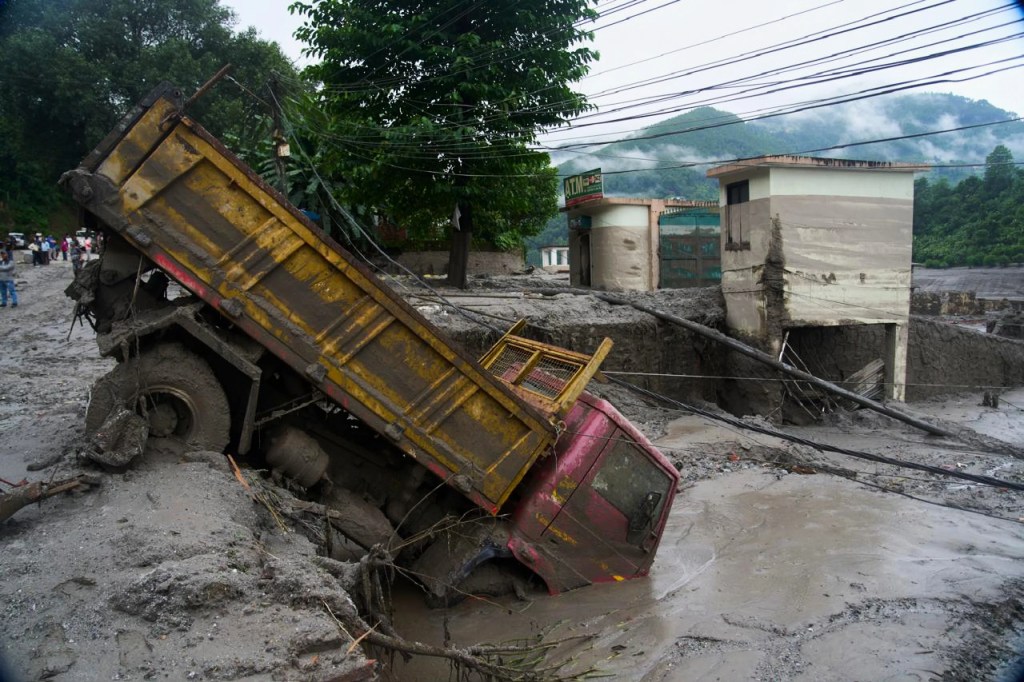
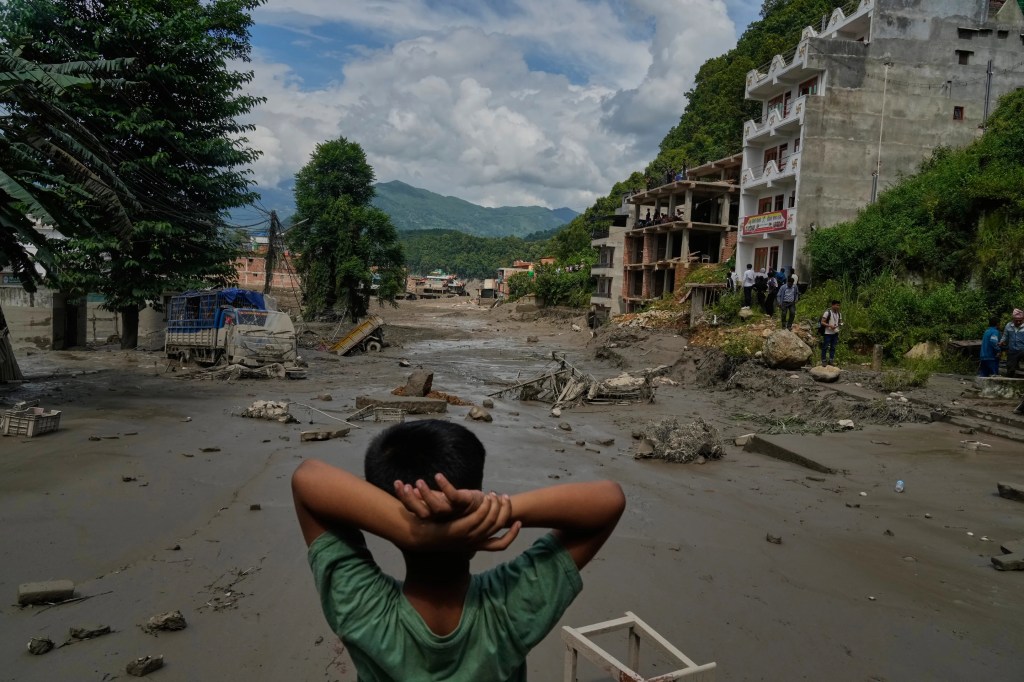
The geography of the Himalayas makes a disaster like this especially dangerous.
Himalayan rivers often run through narrow, steep-sided valleys.
Under normal circumstances, those valleys channel the river.
During a massive debris flow, however, the same geography can work against communities living downstream.
The steep slopes allow water and debris to accelerate rapidly. The narrow valleys concentrate the flow rather than allowing it to spread out harmlessly.
And because the moving material contains rocks, mud and other debris, it can destroy structures that ordinary floodwater might merely damage.
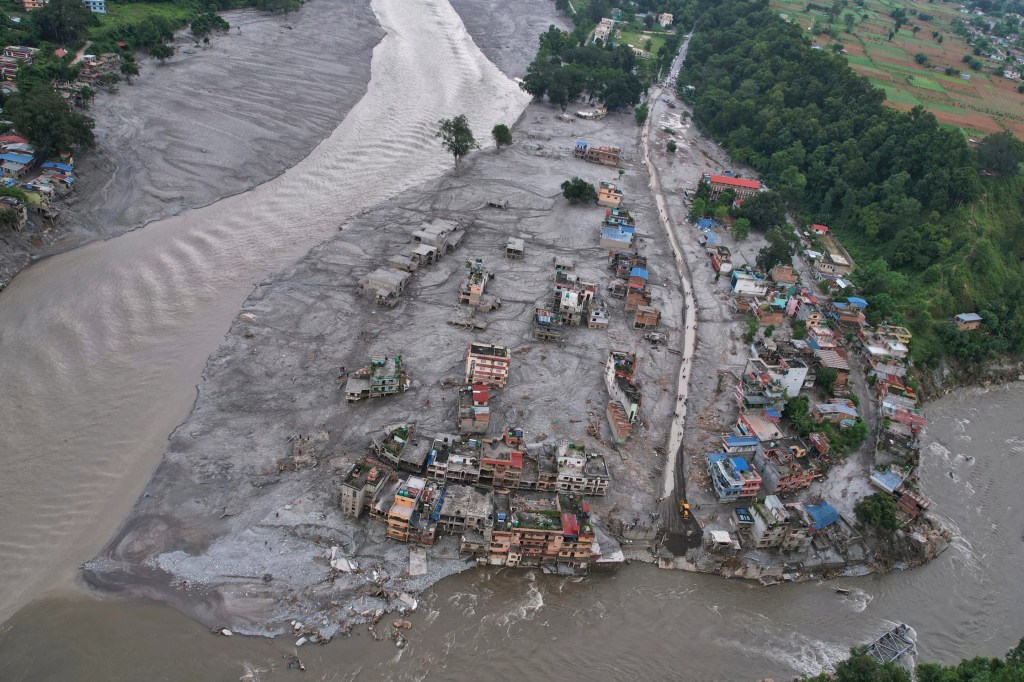
That is why the disaster did not only affect houses.
Roads were damaged.
Bridges were swept away.
Vehicles were buried or carried downstream.
Hydropower infrastructure was badly affected.
Border infrastructure was destroyed.
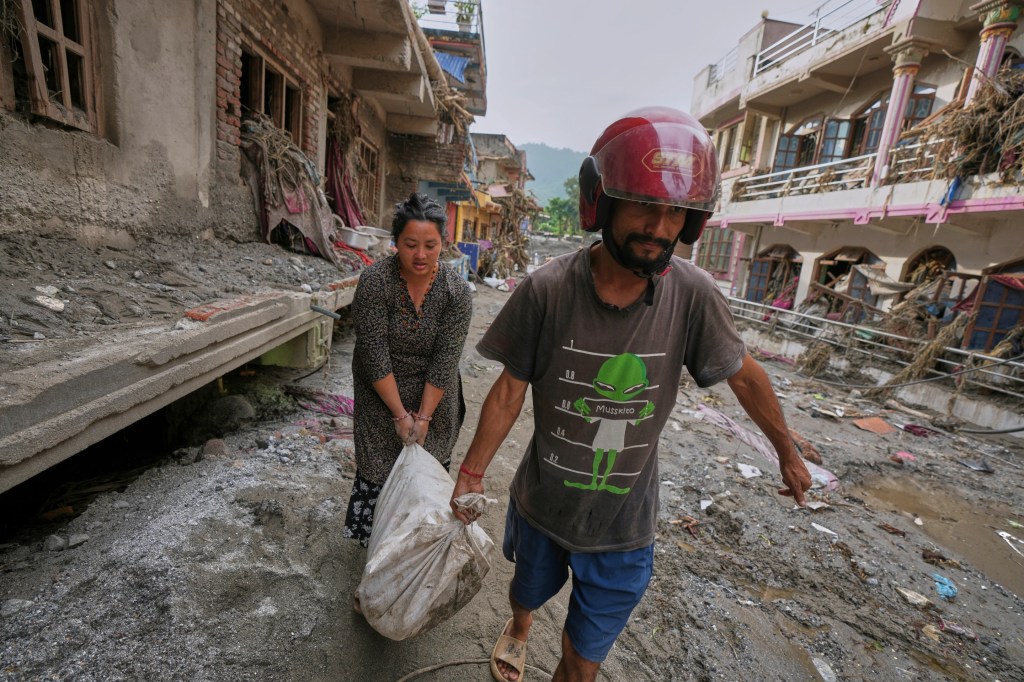
Entire sections of some communities were covered in mud and debris.
The result was not simply a water flood.
It was a moving wall of water, rock and mud.
Why Was There So Little Warning?
This may be one of the most frightening aspects of the disaster.
Traditional flood warnings often rely on things such as rainfall, river levels and weather forecasts.
If heavy rain is falling upstream, authorities can monitor the river and warn communities that water levels are likely to rise.
But a sudden glacier collapse presents a different problem.
The trigger can occur high in an isolated mountain environment, far away from most people.
There may be no long period of gradually rising water.
Instead, the sequence can happen extremely quickly:
collapse → debris flow → river surge → downstream flooding
According to reports, water levels in parts of the river system rose dramatically within a very short period.
That leaves communities with far less time to respond.
This is one of the biggest challenges in protecting Himalayan settlements: some of the most dangerous events can originate in remote locations where monitoring is difficult.
Was This a Glacial Lake Outburst Flood?
There is an important distinction here.
You may have heard the term Glacial Lake Outburst Flood, or GLOF.
A GLOF occurs when a lake formed by glacial meltwater suddenly releases a large amount of stored water. The natural dam holding the lake back can fail because of landslides, ice collapse, erosion or other processes.
Nepal and other Himalayan countries are particularly vulnerable to this type of hazard because warming temperatures have contributed to glacier retreat and the growth of some glacial lakes.
However, the 2026 Nepal disaster appears to have involved a more complicated sequence involving glacier collapse, an ice-rock avalanche and debris flows, rather than being described simply as a conventional GLOF.
Scientists are still examining exactly how the different processes interacted.
This distinction matters because not every flood originating from a glacier is technically a GLOF.
Did Climate Change Cause the Nepal Flood?
This is perhaps the most difficult question.
The short answer is:
We should be careful about saying that climate change directly caused this particular collapse.
The Himalayas are warming, and scientists have increasingly warned that rising temperatures can alter glaciers, permafrost and high-altitude mountain slopes.
As glaciers retreat, landscapes can become unstable.
Melting ice can also contribute to the formation and expansion of glacial lakes. At the same time, thawing permafrost can weaken mountain slopes that were previously held together by permanently frozen ground.
That can increase the potential for landslides, rockfalls and other hazards.
Scientists have therefore raised concerns that a warming Himalaya could become more vulnerable to certain types of high-altitude disasters.
But that does not mean scientists can automatically say:
“Climate change caused the August 26 collapse.”
Attributing a specific geological event to climate change requires detailed scientific analysis.
A more accurate conclusion is that climate change may be altering the conditions in which these hazards occur, potentially making some high-altitude environments less stable.
And that is a much bigger story than one flood.
The Danger May Not Be Over
One of the most worrying developments following the initial disaster has been the formation of a temporary lake or water blockage created by debris.
When enormous amounts of rock and sediment enter a river, they can temporarily block its natural course.
Water then begins accumulating behind the blockage.
This creates a dangerous situation.
If the natural dam remains stable, the water may drain gradually.
But if it suddenly collapses, another powerful surge can travel downstream.
Nepalese authorities have consequently continued monitoring river levels and warning communities about further flooding and landslide risks.
In other words, after a mountain disaster, the danger does not necessarily end when the first wave passes.
The landscape itself may have changed.
And that new landscape can create new hazards.
Why the Himalayas Are So Vulnerable
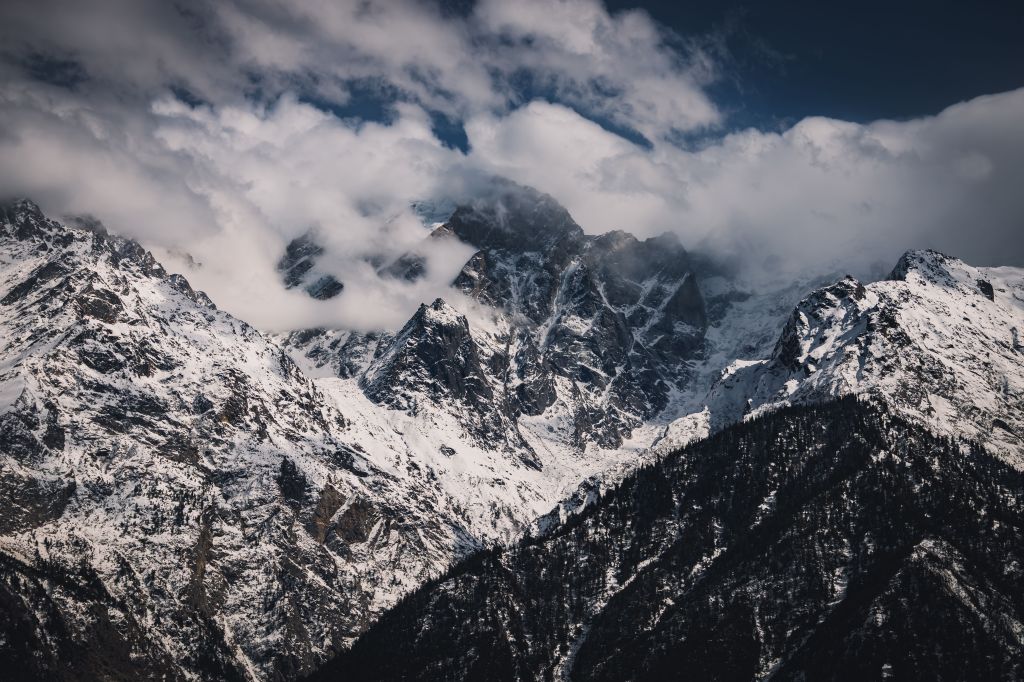
The Himalayas are not just a mountain range.
They are a constantly changing geological environment.
The region contains enormous glaciers, steep slopes, active tectonic zones and rapidly flowing rivers.
Millions of people also depend on these mountains for water, agriculture, transport and energy.
At the same time, roads, hydropower projects, settlements and tourism have expanded into mountain valleys.
That creates a difficult combination:
More infrastructure + more people + unstable terrain + changing climate = greater exposure to natural hazards.
The problem is not that Himalayan disasters are new.
The Himalayas have always experienced landslides, floods, avalanches and earthquakes.
The challenge is that the consequences can become much larger when people and infrastructure are located directly in the path of these hazards.
What Can Be Done?
The Nepal disaster raises an important question:
Can disasters like this be predicted?
Not perfectly.
Nobody can currently predict every glacier collapse or landslide with enough precision to provide a long warning.
But risk can be reduced.
Scientists can monitor glaciers and glacial lakes using satellites, drones and ground-based instruments.
River levels can be monitored in real time.
Early-warning systems can send alerts to communities downstream.
High-risk areas can be mapped.
Infrastructure can be designed to withstand extreme events.
And perhaps most importantly, development in extremely hazardous valleys can be planned with the changing mountain environment in mind.
The goal is not to stop nature.
It is to give people more information and more time to react when nature becomes dangerous.
The Bigger Lesson From Nepal
The 2026 Nepal floods are easy to describe as another devastating natural disaster.
But that description misses the most fascinating part of the story.
The flood began far from the communities that were eventually destroyed.
High above the valleys, a massive section of ice and rock collapsed.
Gravity transformed that collapse into an avalanche of debris.
The debris interacted with water and the river system.
The mountains then channelled the resulting surge downstream.
By the time the flood reached populated areas, the original event had transformed into something much larger.
That is what makes Himalayan disasters so difficult to understand—and so dangerous.
A glacier does not have to simply melt to become a threat.
Sometimes, the mountain itself can suddenly move.
And when it does, the consequences can travel far beyond the place where the collapse began.
The Final Question
The Nepal disaster leaves us with a question that extends far beyond one river or one country:
As the Himalayas change, are we prepared for hazards that can emerge with almost no warning?
The answer will depend not only on predicting the next flood, but on understanding how glaciers, mountains, rivers, climate and human development are becoming increasingly connected.
Because in the Himalayas, what happens at the top of a mountain can become a disaster hundreds of kilometres downstream.
How You Can Help
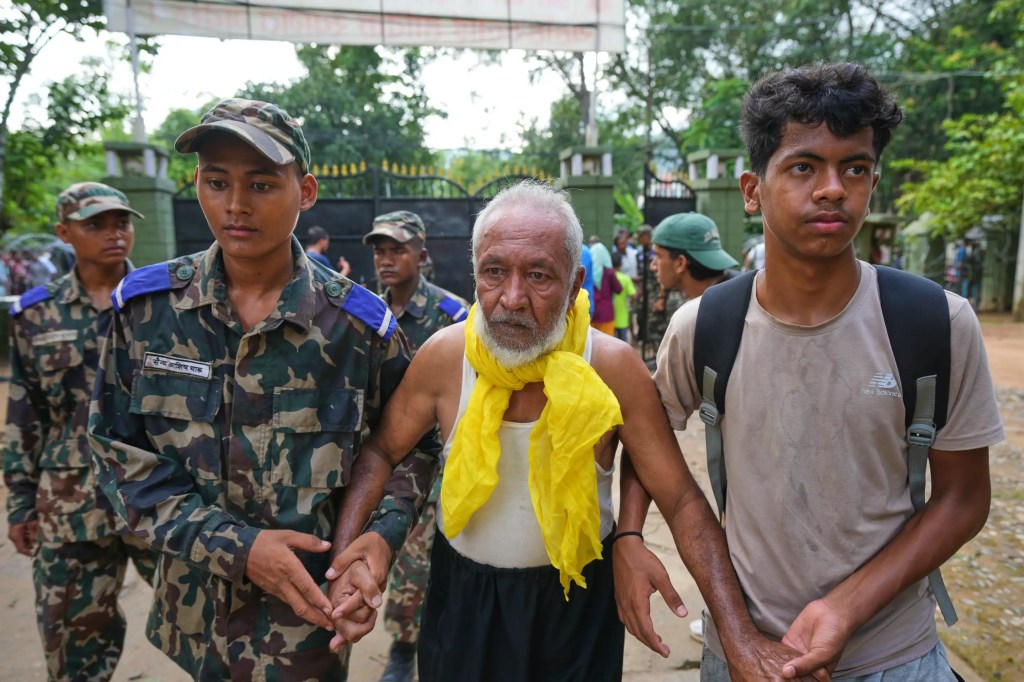
The destruction caused by the Nepal floods has left families without homes, essential services and, in many cases, loved ones. While rescue and recovery operations continue, humanitarian organizations are working to provide food, medical assistance, clean water, sanitation and other emergency support.
If you would like to help people affected by the disaster, you can donate through established organizations responding to the crisis:
UNICEF Nepal Flood Appeal– https://www.unicef.org/nepal/
UNICEF is providing emergency assistance to children and families affected by the floods, including health, nutrition, clean water, sanitation and protection services.
British Red Cross Nepal Flood Appeal– https://www.redcross.org.uk/stories/disasters-and-emergencies/world/nepal-flash-floods-2026
The British Red Cross is raising funds for emergency disaster relief and support for communities affected by the flooding.
Government of Nepal – Prime Minister’s Natural Disaster Relief Fund – https://pmdrf.nchl.com.np
The Government of Nepal has also appealed for financial contributions to support search, rescue, relief and rehabilitation efforts.
Please donate only through official websites and verified relief organizations. Be cautious of social-media posts, unofficial QR codes and personal fundraising accounts claiming to collect money for flood victims.


Leave a comment