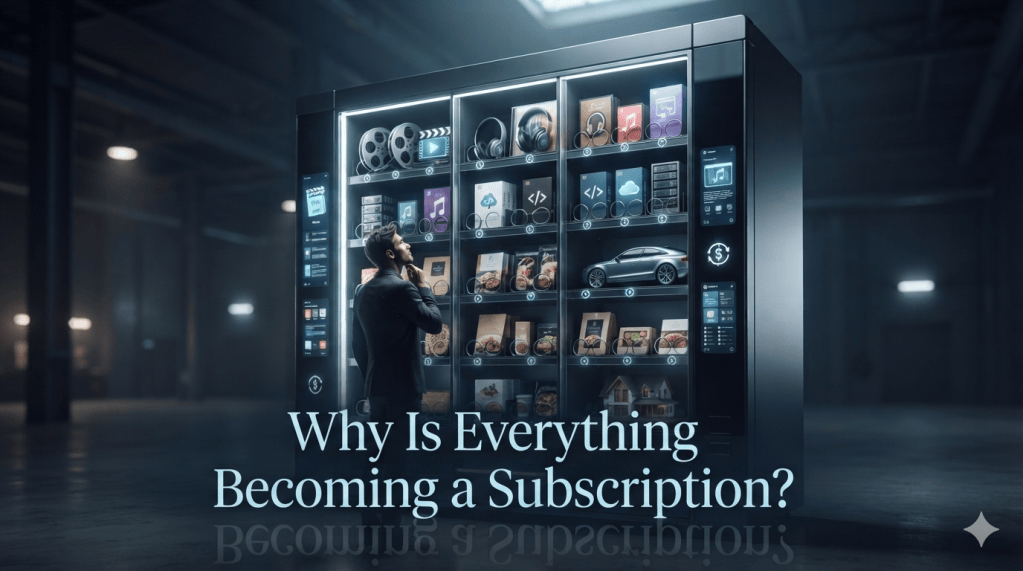
You probably pay for more subscriptions than you realize.
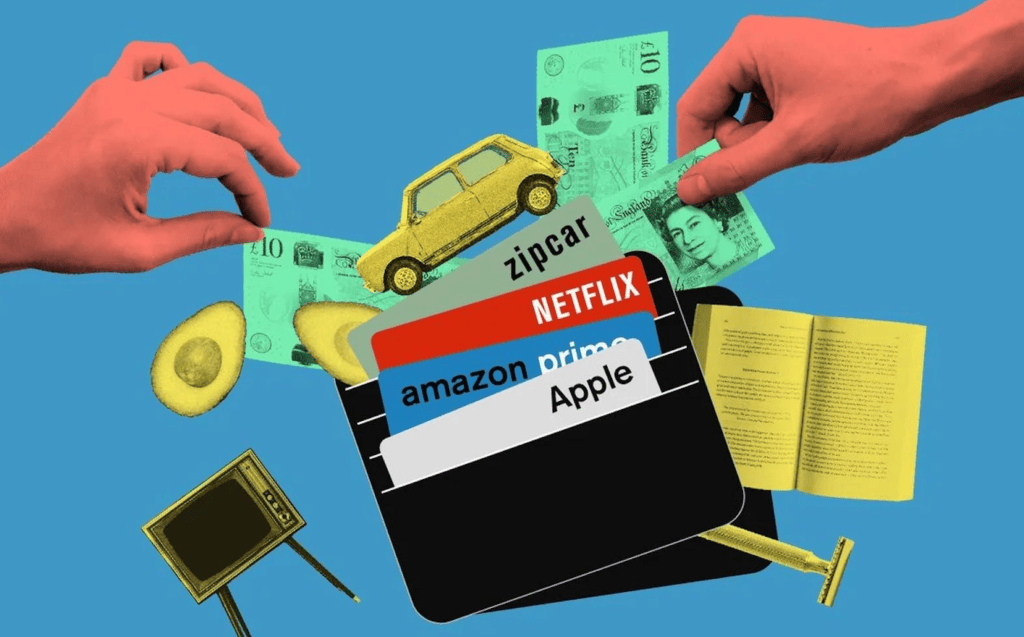
Netflix. Spotify. Cloud storage. Software. Gym memberships. Food delivery. Streaming services. Even some cars now come with features that require recurring payments.
A few years ago, you usually bought something and owned it.
Today, businesses increasingly want you to keep paying for access to it.
But why?
Is it simply because companies want to make more money, or is there something deeper happening in the way modern businesses operate?
The answer lies in one of the most powerful ideas in modern business: the subscription business model.
What Is a Subscription Business Model?
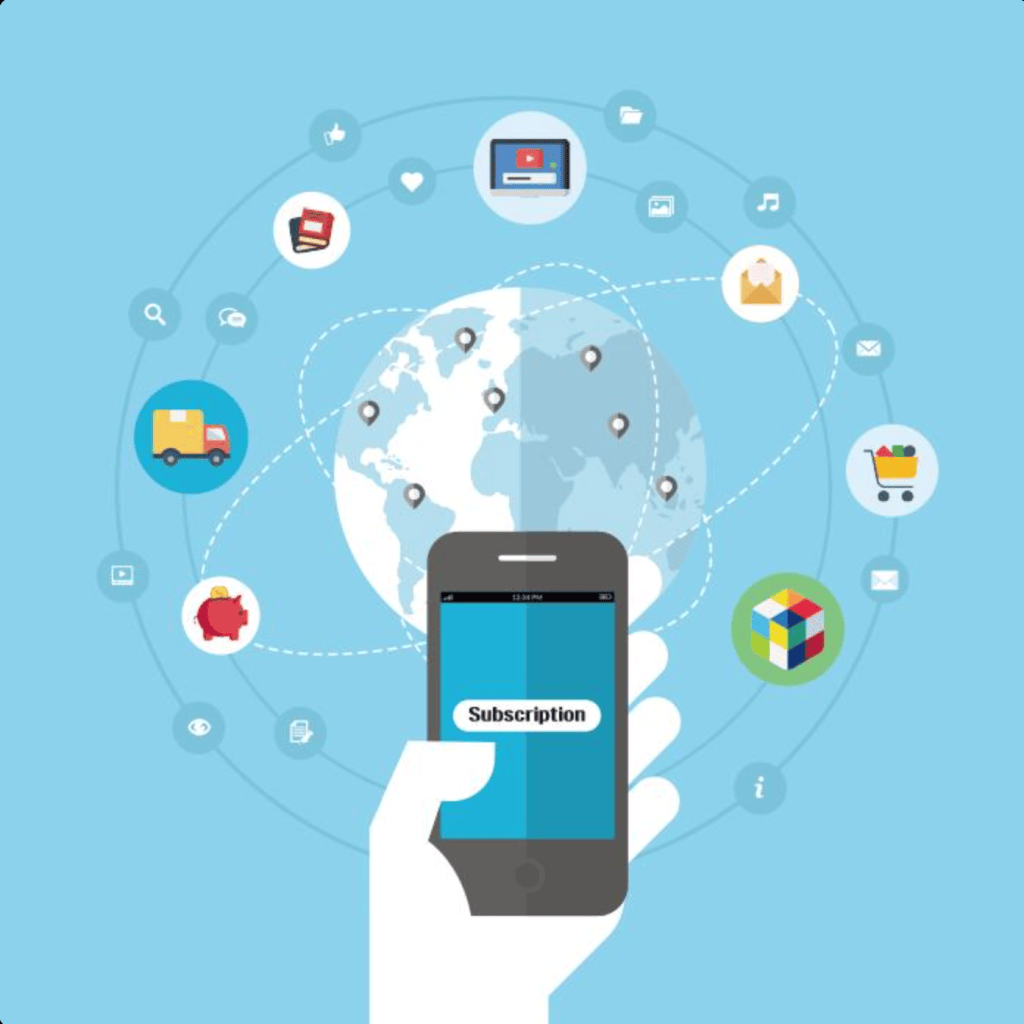
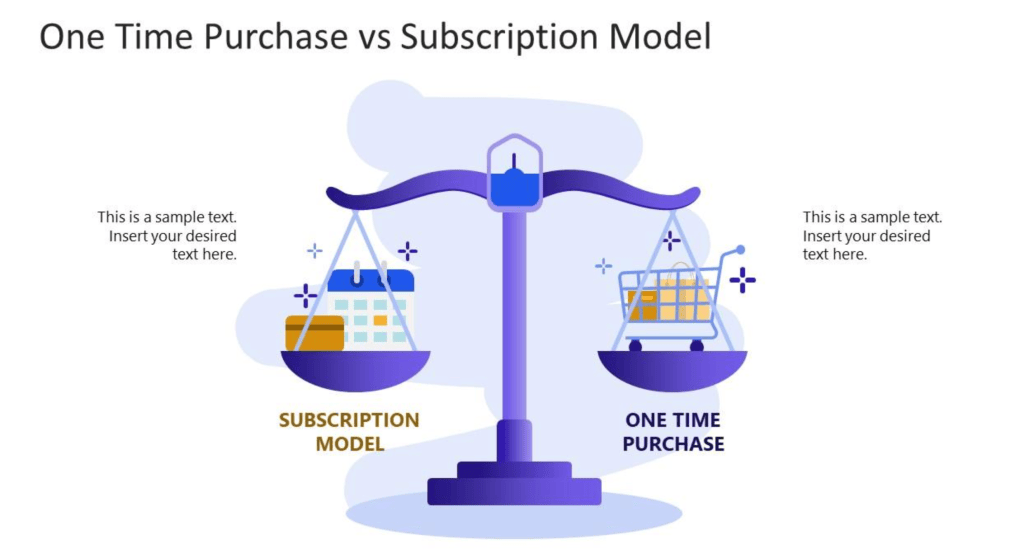
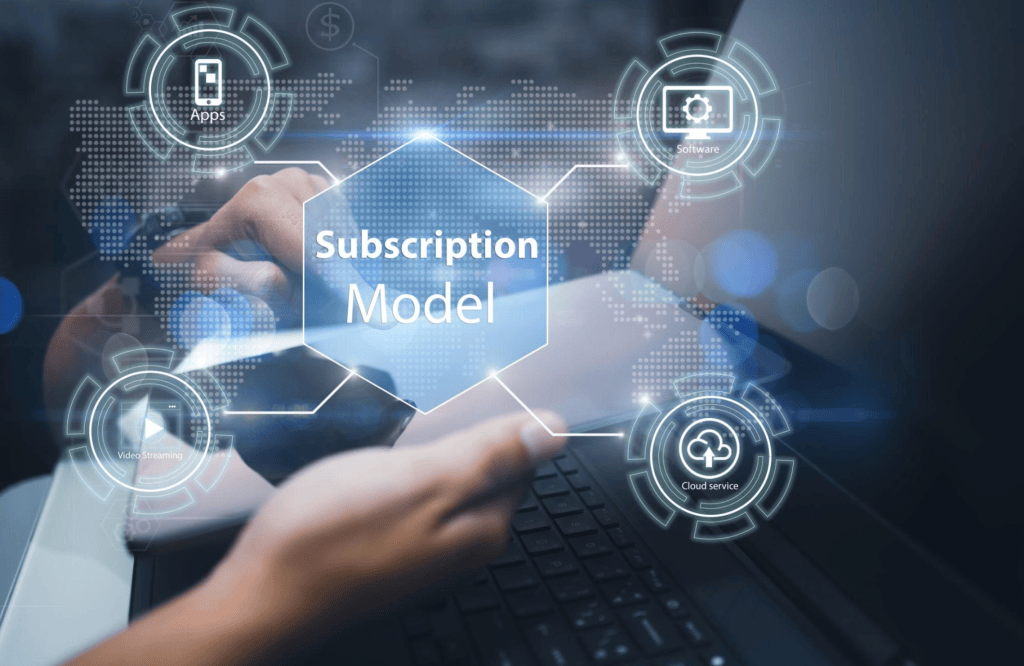
A subscription business model is a system where customers pay repeatedly—usually monthly or annually—to continue accessing a product or service.
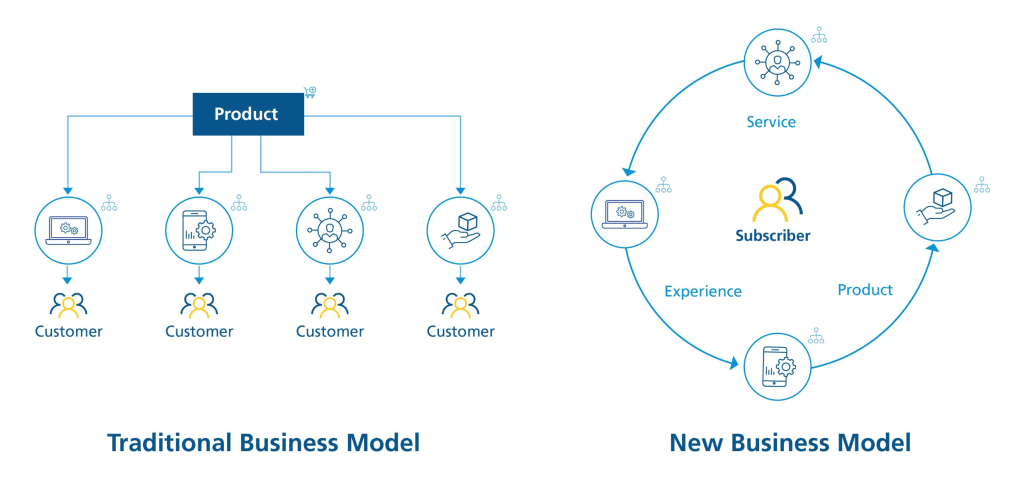
The traditional model is relatively simple:
You pay → You receive the product → The transaction ends.
The subscription model changes that:
You pay → You receive access → You keep paying → The relationship continues.
For example, imagine a company sells software for ₹10,000 as a one-time purchase.
Under the traditional model, the company might earn ₹10,000 from you today and then have to find another customer tomorrow.
Under a subscription model, it might charge ₹1,000 every month.
Now the company has something extremely valuable: recurring revenue.
And that changes the entire business.
1. Companies Love Predictable Revenue
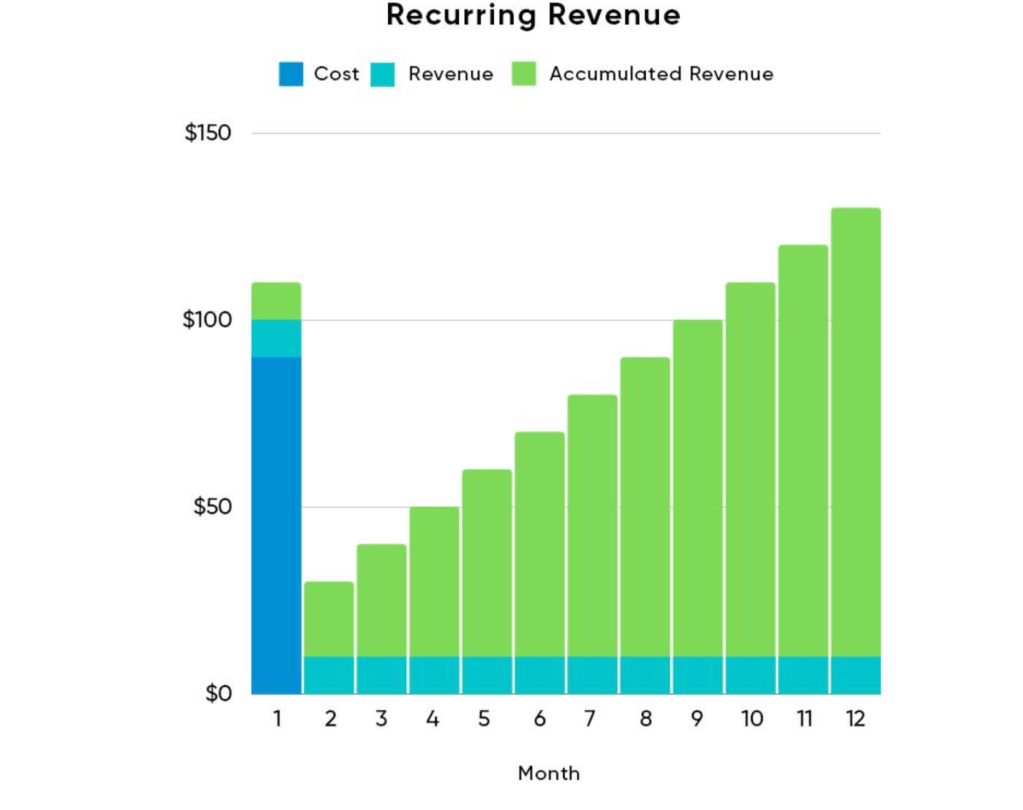
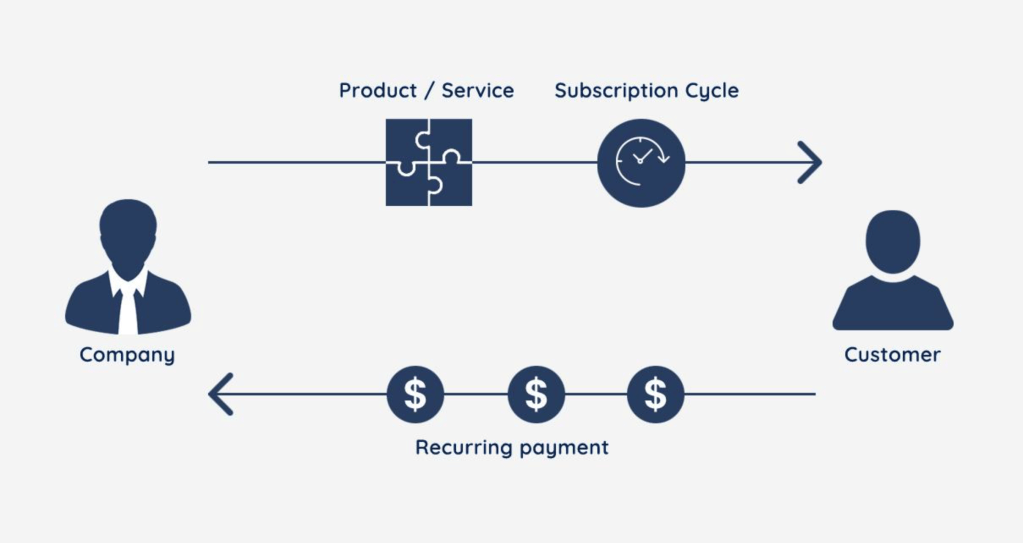
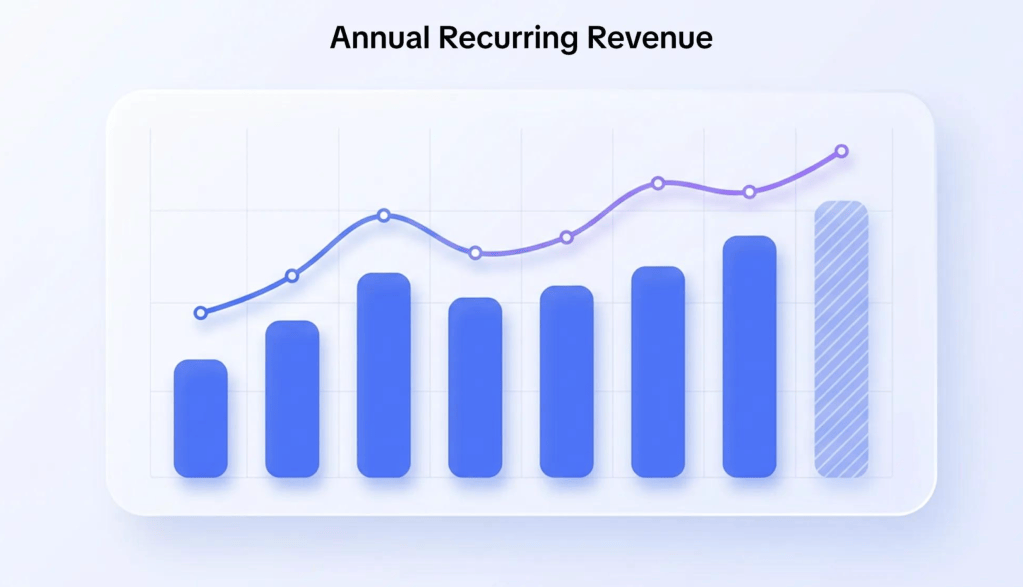
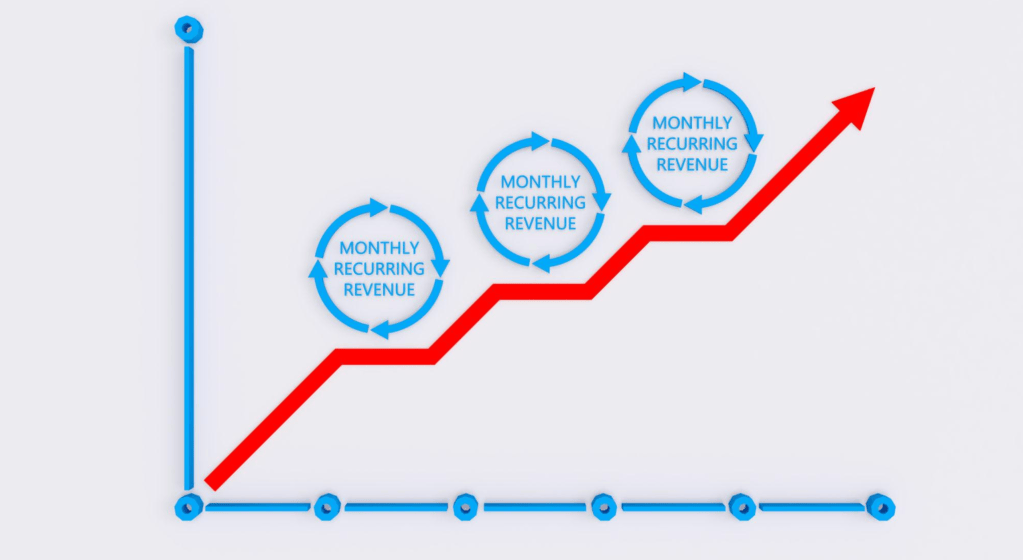
One of the biggest reasons businesses are moving toward subscriptions is predictability.
Imagine two companies.
Company A sells its product for ₹12,000 once.
Company B charges customers ₹1,000 every month.
Both could potentially earn ₹12,000 from a customer over one year.
But Company B knows that the customer is expected to generate another ₹12,000 next year if they remain subscribed.
That makes future revenue easier to estimate.
Businesses can use this predictable income to plan hiring, marketing, product development and expansion.
This is known as recurring revenue, and it has become extremely important for many modern businesses.
Instead of constantly asking:
“How many new customers can we find this month?”
A subscription company can also ask:
“How many of our existing customers will continue paying?”
That is a very different business model.
2. A Customer Can Become More Valuable Over Time
Subscriptions also change the economics of a customer.
Suppose you buy a product from a company for ₹2,000.
The company may earn ₹2,000 from you and then need to find another customer.
But suppose the company gets you to subscribe for ₹200 per month.
After one year, you have paid:
₹200 × 12 = ₹2,400
After three years:
₹200 × 36 = ₹7,200
The longer you stay, the more valuable you become to the company.
This is where an important business concept comes in: Customer Lifetime Value (CLV).
Customer lifetime value estimates how much revenue or profit a business can generate from a customer throughout their relationship with the company.
For subscription businesses, keeping customers for longer can therefore be extremely valuable.
3. ₹199 Feels Smaller Than ₹2,388
There is also a psychological reason subscriptions work.
Imagine someone tells you:
“This service costs ₹2,388 per year.”
You might hesitate.
Now imagine they say:
“It’s only ₹199 per month.”
It feels much smaller.
Technically, the annual cost is almost the same.
But the way the price is presented can change how people perceive it.
This doesn’t mean every subscription is deliberately designed to trick customers. Many subscription services genuinely provide ongoing value.
But smaller recurring payments can make expensive services feel more affordable.
Instead of making one large purchasing decision, the customer makes a series of smaller ones.
And once someone is already subscribed, continuing to pay can feel easier than making the original decision to subscribe.
4. The Internet Made Subscriptions Much Easier
The rise of subscriptions isn’t happening by accident.
Technology made the model much easier to operate.
Consider software.
Traditionally, you might purchase a software program, install it on your computer and use that version for years.
The company would then have to convince you to purchase a new version.
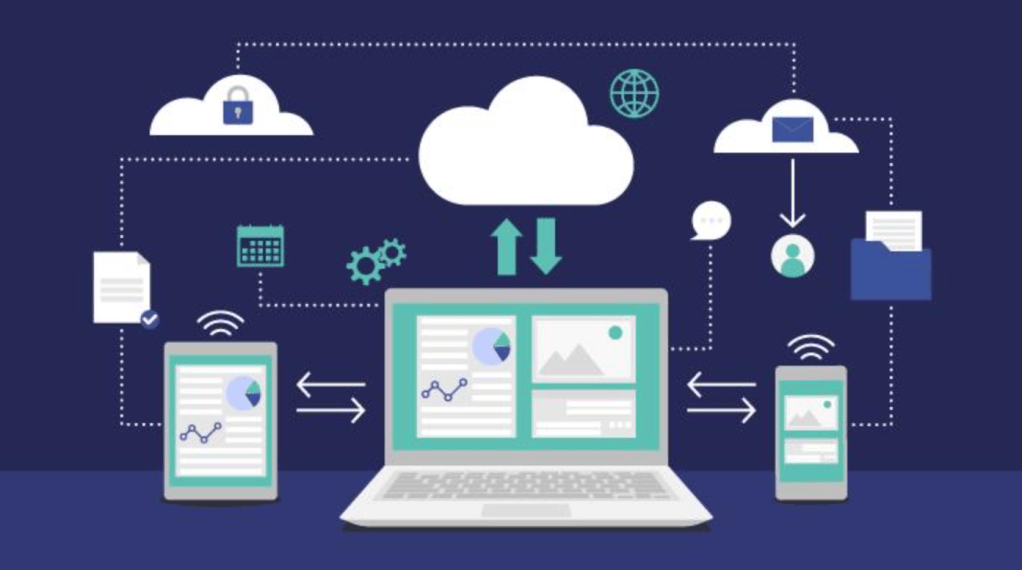
Cloud computing changed this.
Instead of selling software as a finished product, companies can host it online and continuously update it.
Customers can access the latest version while paying monthly or annually.
This created the foundation for Software as a Service (SaaS).
Today, many businesses don’t simply sell software.
They sell continued access to software.
5. Subscriptions Create a Long-Term Relationship
A traditional sale can be relatively short.
You see a product.
You buy it.
The company receives your money.
The relationship may end.
Subscriptions are different.
The company has an incentive to keep you.
That means businesses increasingly focus on things like:
- Customer retention
- Customer experience
- Regular updates
- Personalized recommendations
- Customer support
- Engagement
- Churn reduction
Churn refers to customers cancelling their subscriptions.
For a subscription company, losing customers can be just as important as gaining new ones.
Imagine a company gets 10,000 new subscribers but loses 9,000 existing subscribers.
It may appear to be growing, but maintaining that growth becomes extremely difficult.
This is why subscription businesses constantly monitor retention and churn.
6. Companies Don’t Always Need to Sell You Something New
This is one of the most interesting differences between traditional businesses and subscription businesses.
A traditional company may need to keep convincing you to buy something.
A subscription company needs to convince you to stay.
Netflix doesn’t need you to purchase another Netflix product every month.
Spotify doesn’t need you to buy another music player.
Cloud storage companies don’t need you to purchase a new physical product every year.
Instead, the product is the continued service.
This creates a powerful shift:
The sale is no longer the end of the relationship. It becomes the beginning.
7. Subscriptions Are Expanding Beyond Software
You might think subscriptions are mainly about streaming services and software.
They’re not.
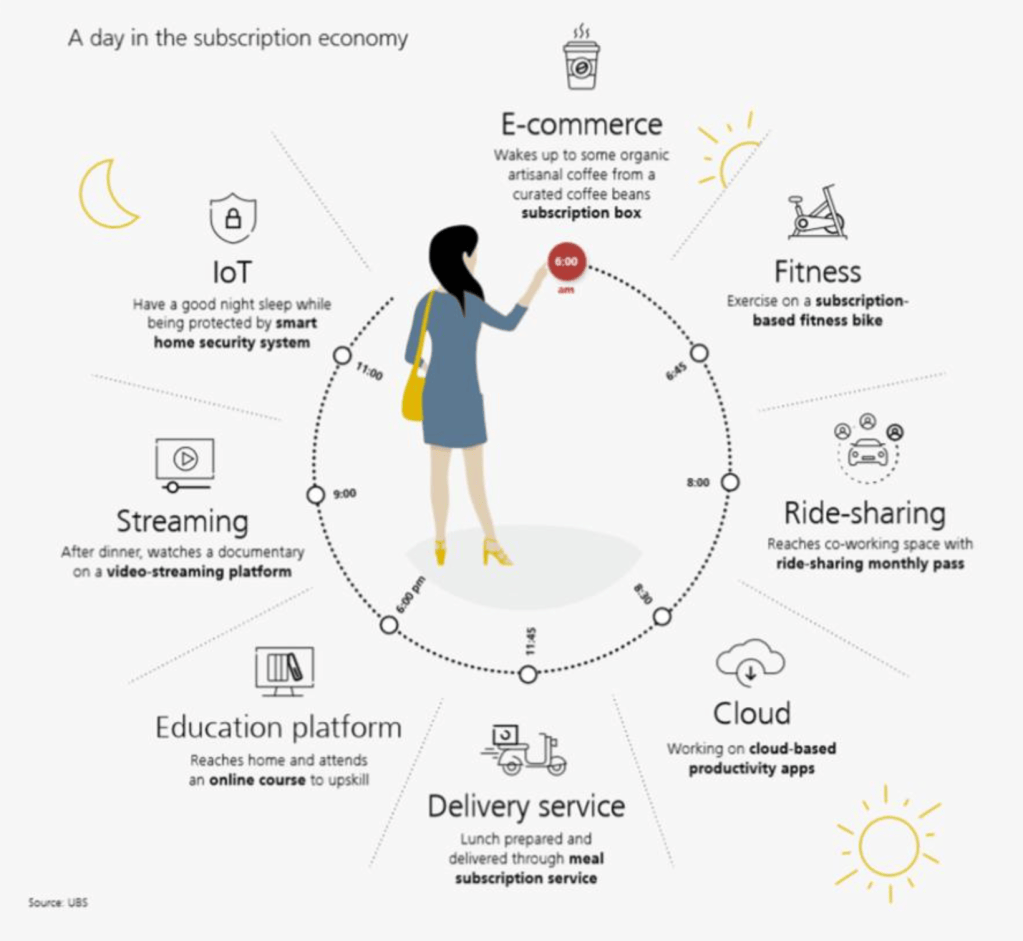
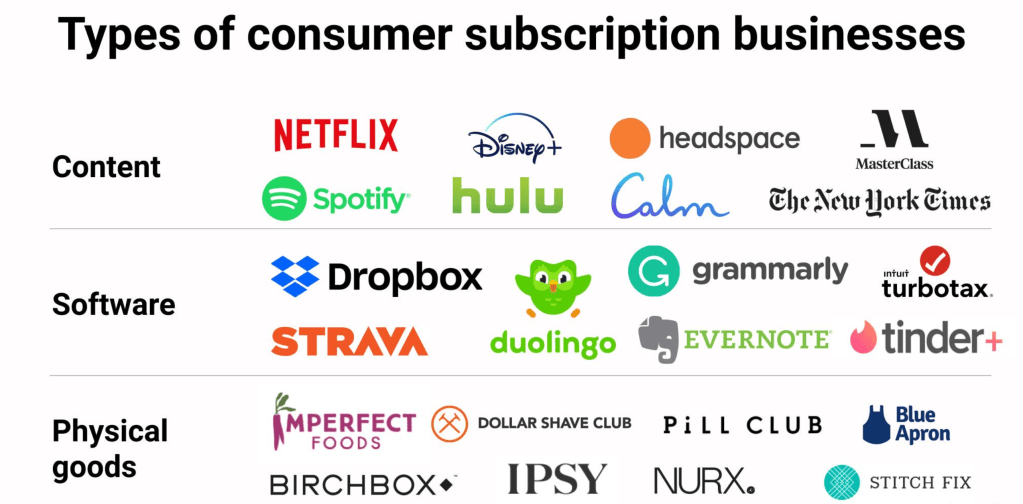
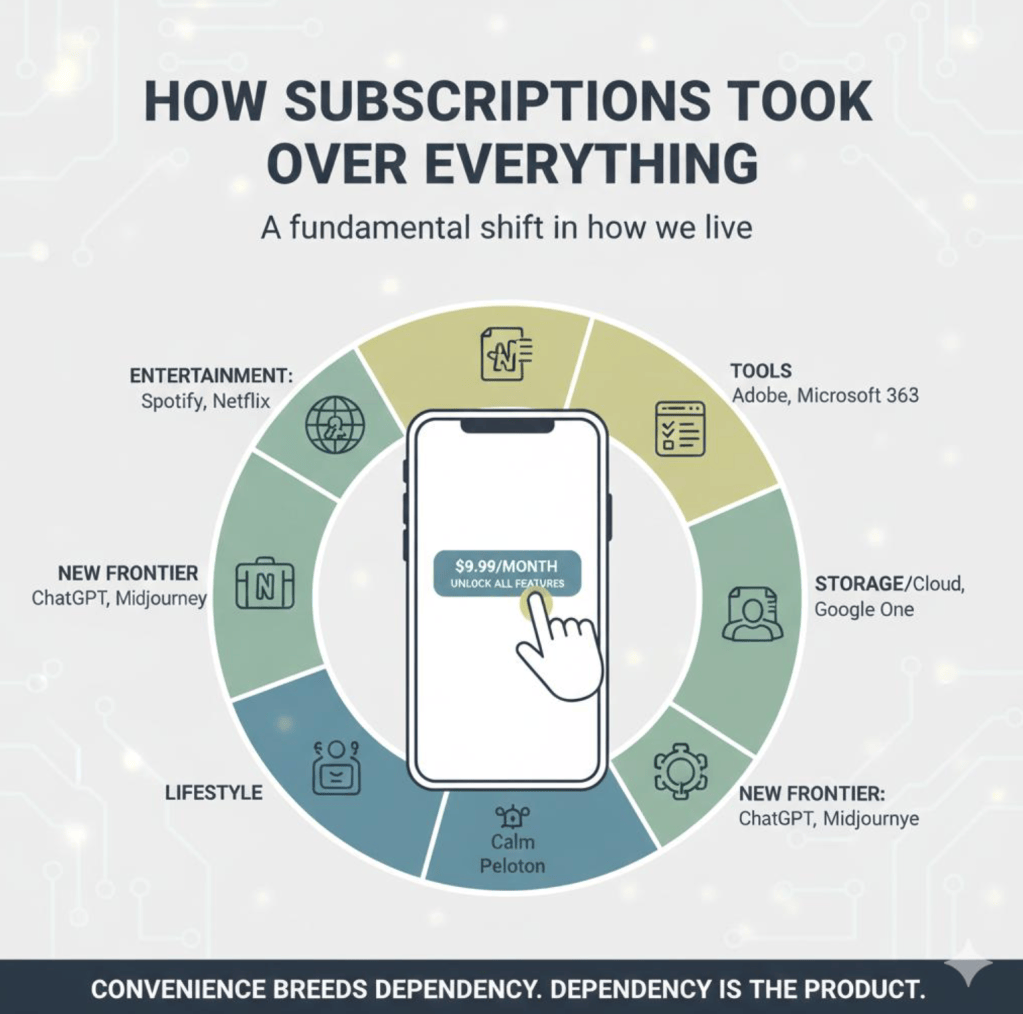
The subscription economy has expanded into many areas of everyday life.
You can find recurring-payment models in:
Entertainment:
Streaming platforms, music services and gaming subscriptions.
Technology:
Cloud storage, software and productivity tools.
Fitness:
Gyms, fitness apps and digital training programs.
Food:
Meal subscriptions, grocery memberships and delivery programs.
Transportation:
Vehicle memberships and subscription-based mobility services.
Consumer products:
Regular deliveries of products such as household essentials.
The reason businesses are interested is simple:
Recurring customers can create recurring revenue.
8. But There’s a Problem: Subscription Fatigue
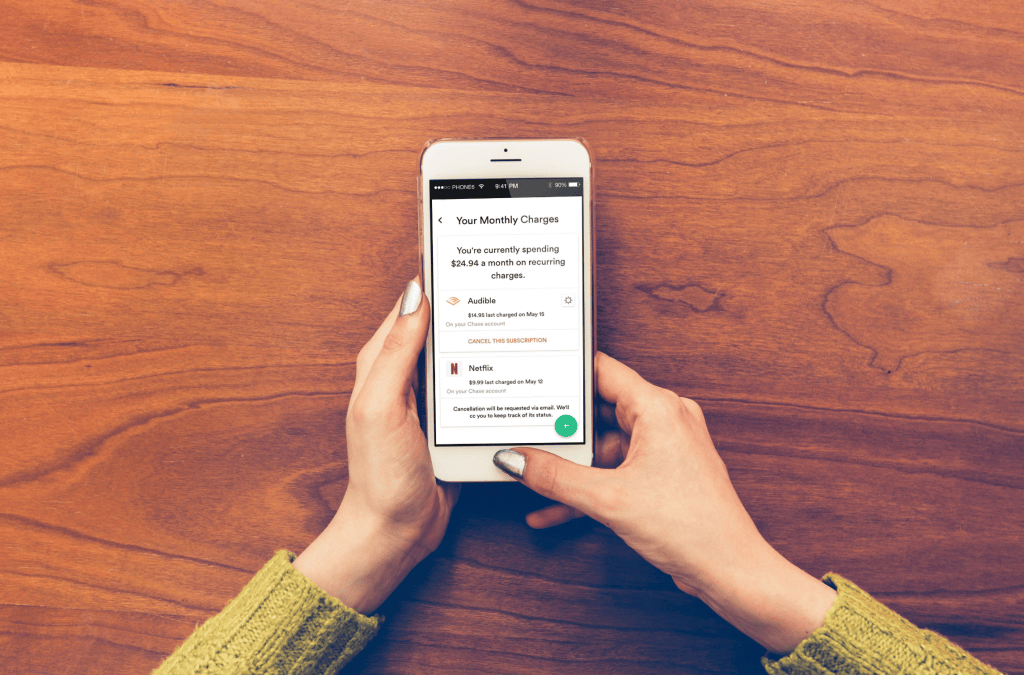
Subscriptions are great for businesses—but customers can eventually get tired of them.
This is sometimes called subscription fatigue.
Think about how many services you might subscribe to.
₹199 for one service doesn’t sound expensive.
Another ₹299 doesn’t sound expensive.
Then another ₹499.
Then another ₹699.
Individually, each subscription may seem reasonable.
Together, they can become a significant monthly expense.
And there is another problem.
People often forget about subscriptions they aren’t actively using.
A customer might subscribe to a service for one particular reason, stop using it after a few months and continue paying because cancelling it feels like a hassle.
This is one reason consumers are becoming more conscious about regularly reviewing their subscriptions.
9. The Dark Side of Recurring Revenue
The subscription model itself isn’t necessarily bad.
The problem begins when businesses prioritize recurring payments over customer value.
Some customers may encounter:
- Complicated cancellation processes
- Unexpected price increases
- Automatic renewals
- Features being moved behind higher-priced plans
- Services that provide little value after the initial purchase
This creates an important question:
Are subscriptions being used because they are genuinely better for customers, or simply because they are better for businesses?
The answer depends on the product.
For something like cloud storage, paying continuously makes sense because the company is continuously providing storage and infrastructure.
For software that receives regular updates and support, a subscription can also make sense.
But paying every month for something that could reasonably be purchased once can feel very different.
10. The Biggest Shift: From Ownership to Access
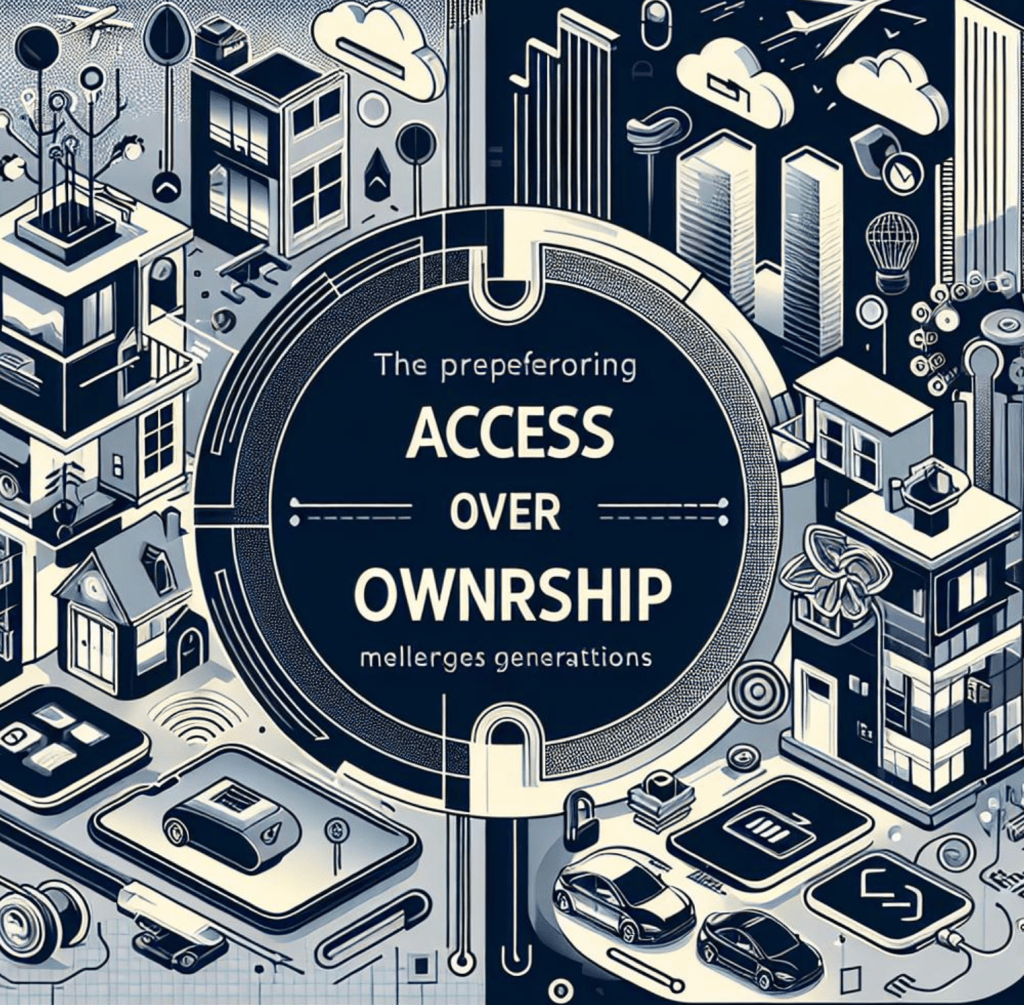
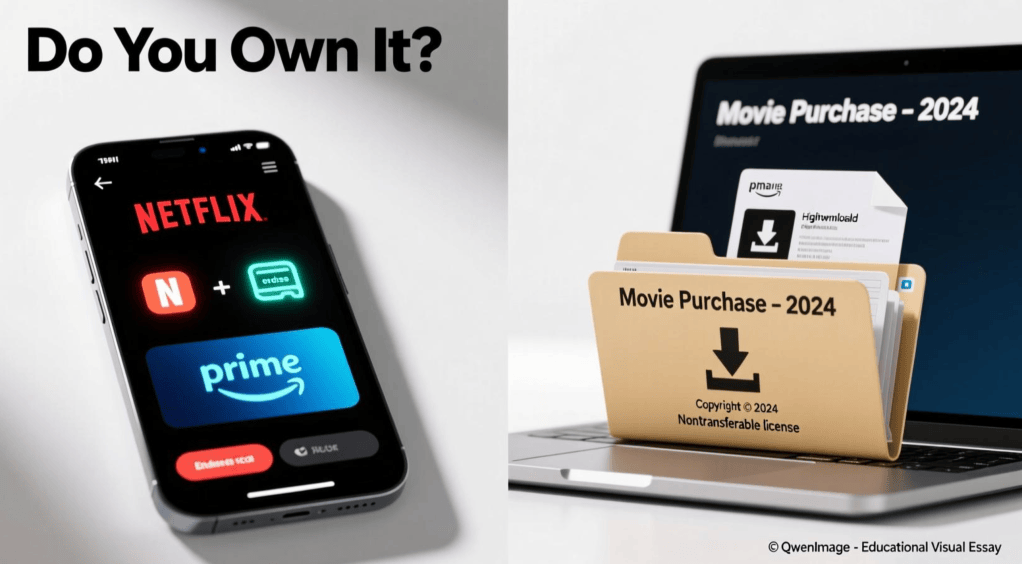
Perhaps the most important change isn’t actually about monthly payments.
It’s about ownership.
For generations, the traditional idea was:
You pay for something → You own it.
The subscription economy increasingly offers:
You pay → You get access.
Think about the difference.
If you purchase a book, you own the book.
If you subscribe to a streaming service, you don’t own the movies.
You are paying for access to a library of content.
If you purchase software permanently, you own a version of the software.
With a subscription, you’re paying for continued access to the service.
This isn’t necessarily better or worse.
It’s simply a different economic relationship.
Why Do Companies Prefer Subscriptions?
At its core, the subscription business model solves several problems for companies.
It can provide:
Predictable revenue
Businesses can estimate future income more easily.
Higher customer lifetime value
Customers can generate revenue over many months or years.
Continuous customer relationships
Companies have an ongoing relationship rather than a single transaction.
More opportunities for upselling
Businesses can offer higher-tier plans and additional features.
Better data and feedback
Long-term relationships give companies more opportunities to understand how customers use their products.
This is why the subscription model has become so attractive across industries.
Are Subscriptions the Future of Business?
Probably—but not for everything.
Subscriptions work particularly well when a company continuously provides something valuable.
Streaming platforms continuously provide content.
Cloud services continuously provide storage and infrastructure.
Software companies continuously provide updates and support.
In these situations, recurring payments can make sense.
But consumers are unlikely to happily subscribe to everything forever.
As subscriptions become more common, people may become more selective about what they are willing to pay for every month.
The future may therefore not be about everything becoming a subscription.
Instead, it could be about businesses figuring out what customers are actually willing to keep paying for.
Final Thoughts
The next time you see a service advertised for ₹199 per month, don’t just think about the price.
Think about the business model behind it.
That ₹199 isn’t simply a payment.
It’s potentially the beginning of a relationship that could last for years.
And that’s exactly why companies love subscriptions.
The traditional business model asked:
“Can we sell this to you?”
The subscription economy asks a different question:
“Can we keep you paying?”
That shift—from selling products once to building recurring customer relationships—is one of the biggest changes happening in modern business.
And perhaps the most interesting part is that the subscription economy isn’t just changing how companies make money.
It’s changing what it means to own something in the first place.


Leave a comment