
You’ve had this conversation before. Someone says something you think is wrong — maybe about fairness, or cheating, or whether it’s okay to lie to spare someone’s feelings — and when you push back, they shrug and say: “Well, that’s just my opinion. Everyone’s entitled to their own.”
And just like that, the conversation is supposed to be over. Case closed. Nobody’s right, nobody’s wrong, we all just… believe things.
Except here’s the strange part: almost nobody actually lives like that’s true. Say “murder is wrong” is just an opinion, like preferring chocolate over vanilla, and watch how fast even the person who said it will object if you don’t seem bothered by murder. We act like some things are more than opinions — even when we say they’re not.
This tension has a name, and philosophers have been arguing about it for over 2,000 years. It’s the debate between moral relativism and moral objectivism. You don’t need a philosophy degree to follow it — you just need to slow down and look at what you actually believe.
Two very different claims about morality
Moral relativism is the idea that there’s no single, universal standard of right and wrong — moral truths are relative to a culture, a time period, or even an individual person. What’s “wrong” in one society might be perfectly fine in another, and neither side is more correct than the other. There’s no view from nowhere that can judge between them.
Moral objectivism (sometimes called moral realism) is the opposite claim: some moral truths hold regardless of what any individual or culture happens to believe. Slavery wasn’t “fine for its time” — it was wrong even when almost everyone around it insisted otherwise. On this view, moral disagreement doesn’t mean there’s no right answer; it just means someone involved in the disagreement is mistaken — the same way people can disagree about a math problem without that meaning math has no answers.
Notice these aren’t small differences. They lead to totally different conclusions about whether it even makes sense to argue about morality at all.
Where relativism comes from — and its strongest case
Relativism isn’t a modern invention. One of the earliest versions comes from the ancient Greek philosopher Protagoras, famous for the line “man is the measure of all things” — the idea that truth (including moral truth) is relative to the person perceiving it. Centuries later, Friedrich Nietzsche argued that moral systems aren’t timeless truths handed down from the heavens — they’re human inventions, shaped by history, power, and culture, and dressed up to look more permanent than they really are.
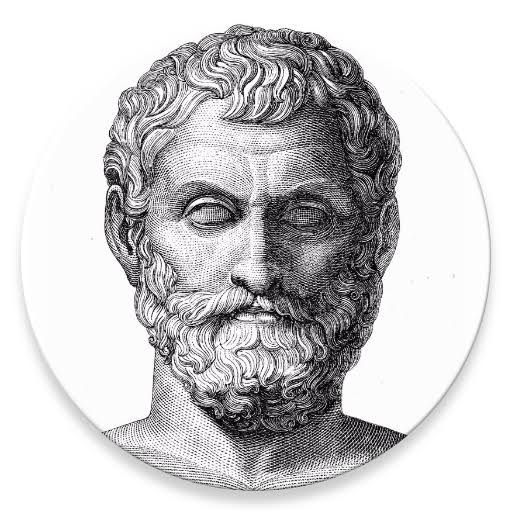

The strongest case for relativism is genuinely persuasive: look at how much morality actually has varied across history and cultures. Practices that were considered completely normal in one era — dueling, arranged marriage, certain forms of punishment — are viewed totally differently today. If morality were truly universal and objective, why does it look so different depending on where and when you’re standing? Relativism also has an appealing humility to it: it discourages one culture from arrogantly imposing its values on another simply because it has more power.
Where objectivism comes from — and its strongest case
Objectivism also has deep roots. Plato argued that moral concepts like justice and goodness exist as real, unchanging truths — not just opinions we invent, but things we discover, the same way we discover facts about mathematics. Immanuel Kant later argued that morality comes from reason itself: certain duties (like not treating people merely as tools for your own use) apply to every rational being, everywhere, regardless of culture or personal preference.


The strongest case for objectivism comes from something most relativists quietly agree with: some moral claims feel more like discoveries than preferences. When people condemn genocide, slavery, or torturing children for fun, they’re not usually saying “that offends my personal taste.” They’re saying something went wrong — a claim that only makes sense if there’s a standard being violated, not just a difference of opinion. Objectivists argue that relativism, taken all the way seriously, would mean we have no real grounds to say the Holocaust was actually wrong — only that we disapprove of it, while the people who did it simply had a different opinion. Most people, including most relativists, find that conclusion hard to accept.
Why “it’s just my opinion” doesn’t settle anything
Here’s the deeper problem with reaching for relativism to end an argument: it proves too much. If all moral claims are just personal opinion with no deeper standard behind them, then the statement “everyone’s opinion is equally valid” is alsojust an opinion — one that has no more authority than the opposite view. Relativism can’t declare itself the winner of the debate without quietly borrowing the very idea of objective correctness that it’s trying to deny.
That doesn’t mean objectivism wins by default, either. Objectivists still have to explain why moral disagreement is so widespread if there really is one right answer out there — and why we should trust our own moral instincts over anyone else’s.
A gentler middle ground most people actually live in
Most people, once they really examine their own beliefs, land somewhere between the two extremes. They think a few things are close to universally wrong — needless cruelty, betrayal of trust, exploiting the powerless — while also recognizing that plenty of moral questions genuinely do depend on context, culture, and circumstance (how to grieve, how to structure a family, what counts as respectful behavior). That’s not a contradiction. It’s just recognizing that “is morality objective?” might not have one single answer for every kind of moral question.
So next time someone ends a disagreement with “well, that’s just my opinion,” it’s worth asking a gentle follow-up: do you actually believe that — for everything? Or just for this one thing, because it’s convenient right now? More often than not, the answer reveals that we all believe in some moral truths more firmly than we let on — we just don’t like admitting it in the middle of an argument.
Philosophers referenced in this piece:
- Protagoras (c. 490–420 BCE) — early Greek relativist, known for “man is the measure of all things”
- Friedrich Nietzsche (1844–1900) — German philosopher who challenged the idea of fixed, universal moral truths
- Plato (c. 428–348 BCE) — Greek philosopher who argued moral truths are objective and discoverable, like mathematical truths
- Immanuel Kant (1724–1804) — German philosopher who grounded universal moral duties in reason itself


Leave a comment