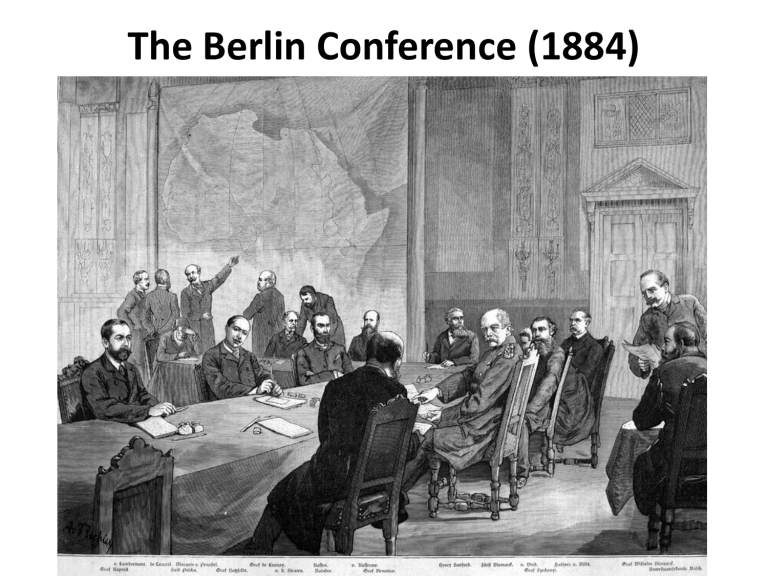
Picture this: fourteen countries send their sharpest diplomats to a grand building in Berlin. Fireplaces crackle. Wine glasses clink. Maps of an entire continent are spread across polished tables. Over the course of three months, these men will decide the fate of millions of people, redraw the borders of dozens of nations, and reshape a continent for the next century and beyond.
Not one African is in the room.
This isn’t the opening scene of a novel. It happened. Between November 1884 and February 1885, in a stately mansion on Wilhelmstrasse in Berlin, the Berlin Conference quietly rewired the future of Africa — and almost nobody outside a small circle of European elites knew it was happening until it was already done.
The Scramble Before the Scramble
By the early 1880s, Europe had a problem. For centuries, European powers had nibbled at Africa’s coastline — trading posts here, a fort there, missionaries scattered inland. But now, new pressures were building. Industrial economies were hungry for raw materials: rubber, palm oil, ivory, diamonds, gold. Steamships and quinine (which finally made it possible to survive malaria) meant Europeans could push deep into the interior for the first time. And national pride was at stake — France, Britain, Germany, Portugal, and Belgium were all racing each other, terrified of being left behind.
The result was chaos. European nations were planting flags on the same territories, backing rival local rulers, and edging toward war with each other over land none of them actually owned.
Germany’s Chancellor, Otto von Bismarck , saw an opportunity. Not to grab Africa for Germany himself, exactly — but to play referee, boost Germany’s prestige, and stop Europe’s own conflicts from spiraling. So he invited the major powers to Berlin to sort it out like gentlemen.
The Rules of a Game No One Else Was Allowed to Play
The conference produced a document called the General Act of Berlin , and its logic was almost absurdly simple: Africa was treated as terra nullius — land belonging to no one — despite the fact that it was home to thousands of distinct kingdoms, empires, and societies, from the Ashanti to the Zulu to the Sokoto Caliphate, each with their own governments, laws, and histories stretching back millennia.
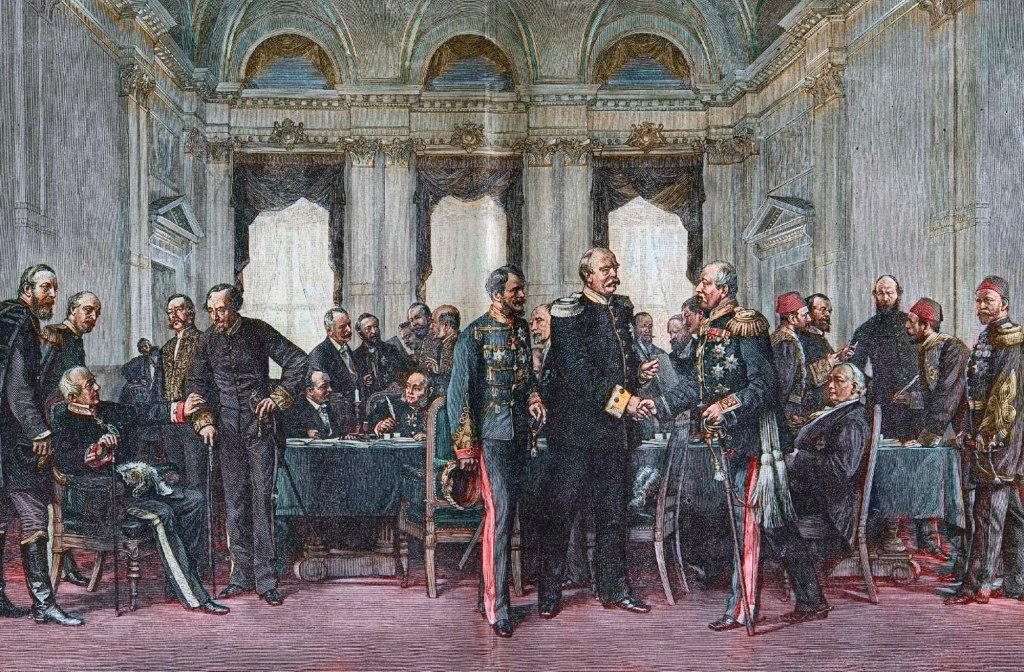
The delegates agreed on a few ground rules:
- The “Principle of Effective Occupation” — a European power could only claim territory if it actually had troops or administrators there, not just a flag on a map. This is what triggered the real land grab: everyone suddenly needed boots on the ground, fast.
- Free trade and navigation on the Congo and Niger Rivers, so no single power could choke off others’ access.
- A vague commitment to “suppress the slave trade” and promote “civilization,” language that was used to morally justify conquest to audiences back home.
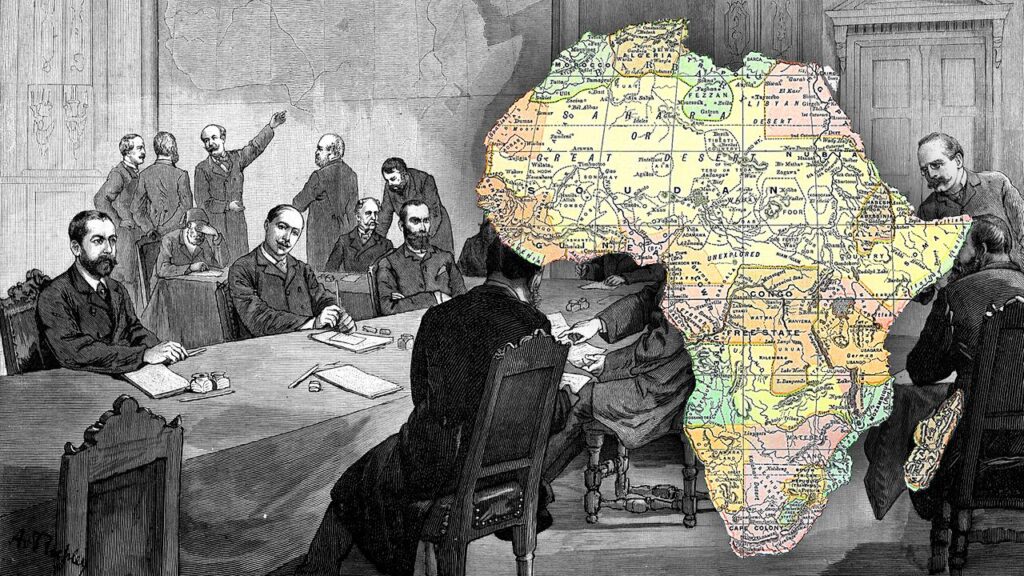
Borders were drawn with rulers, straight lines slicing across deserts, rivers, and mountain ranges — with almost no regard for the ethnic groups, kingdoms, or trade networks already there. Look at a modern map of Africa today: you can still see it. Perfectly straight borders in places like Egypt, Libya, and Namibia are basically fossils of that conference room in Berlin.
The Numbers Are Staggering
In 1870, Europeans controlled roughly 10% of the African continent, mostly coastal footholds. By 1914 — just three decades later — that number had exploded to about 90%. Only Ethiopia and Liberia remained independent, and even Ethiopia had to fight off an Italian invasion to keep it that way.
King Leopold II of Belgium walked away from Berlin with something particularly chilling: personal ownership — not Belgium’s, his own — of the Congo Free State, an area 76 times the size of Belgium itself. What followed there was one of the most brutal colonial regimes in history, with forced labor and mutilation used to extract rubber, killing an estimated 10 million people.
Why “No Africans in the Room” Actually Matters
It’s tempting to read that detail as a footnote. It isn’t. The absence of African voices wasn’t an oversight — it was the entire operating assumption of the conference. European powers negotiated access rights to each other, not agreements with the people who lived there. Kingdoms with centuries of diplomatic history, treaties, and trade relationships with Europeans were simply erased from the negotiating table the moment it became convenient.
The borders drawn in Berlin didn’t just ignore ethnic and cultural realities — they actively split them apart. The Bakongo people ended up divided across French Congo, Belgian Congo, and Portuguese Angola. The Somali people were split among five different colonial territories. Communities that had traded, intermarried, and governed themselves together for generations woke up as “citizens” of entirely different empires, sometimes at war with each other.
Historians point to this arbitrary map-making as a root cause of many conflicts that still shape the continent today — from border disputes to civil wars rooted in ethnic groups forced into shared, artificial nations, or split across hostile ones.
The Legacy Nobody Voted For
The Berlin Conference didn’t “discover” Africa or even really “divide” it in the sense of settling anything — it legitimizeda scramble that was already underway and gave it legal cover among European powers. It took less than four months to draw lines that would take more than a century to live with.
The conference room in Berlin is still there. It’s a quiet, unremarkable building now. But the lines drawn across its tables in the winter of 1884 are still visible today, in every airport border check, every contested frontier, and every modern African nation whose shape was decided by people who had never set foot there — and never invited anyone who had.
Curious Context is about the moments history quietly hinges on. If this one surprised you, you’ll probably like digging into what happened next: the Congo Free State, the Berlin-to-Baghdad railway rivalries, or how quinine quietly enabled empire.


Leave a comment