In August 1953, a small team of American and British spies, working with less than a million dollars and a handful of paid mobs, toppled the democratically elected leader of a sovereign nation in less than a week.
No army invaded. No formal declaration of war was made. Most Americans had no idea it happened — and for decades, the U.S. government officially denied it.
Seventy years later, Iranian officials still invoke it in speeches. American diplomats still get asked about it in Tehran. And historians widely consider it one of the clearest throughlines connecting a single covert operation to a relationship between two countries that remains broken to this day.
This is the story of Operation Ajax.
A Prime Minister Who Wanted His Own Oil
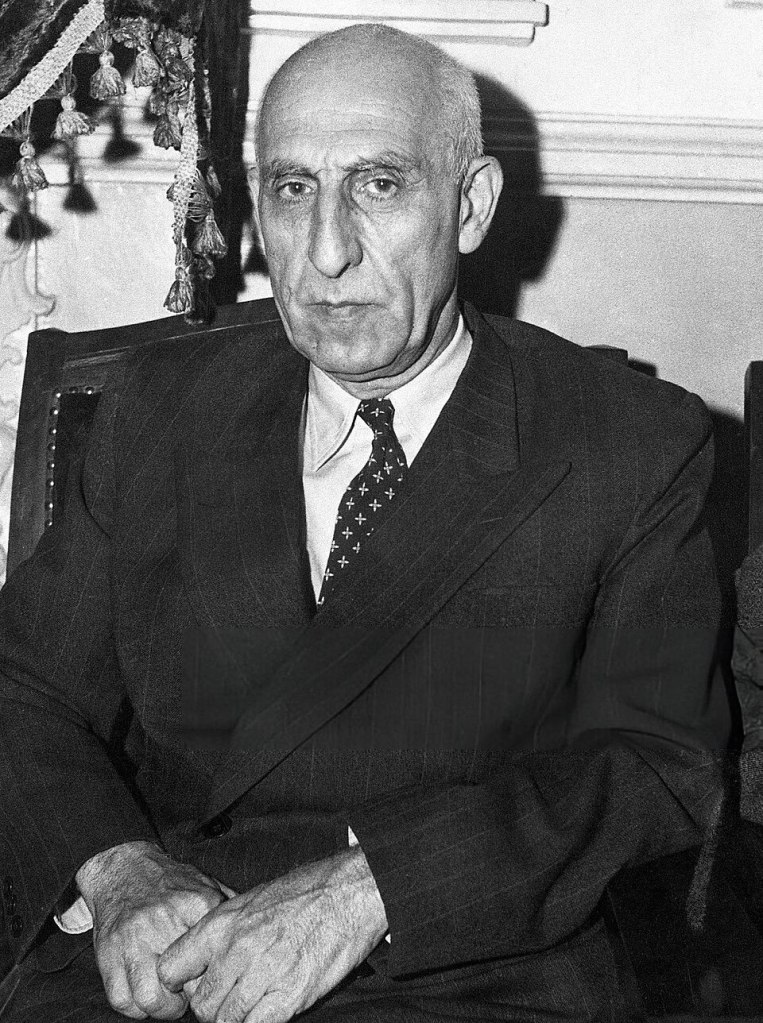
To understand the coup, you have to understand the man it removed: Mohammad Mossadegh, Iran’s prime minister, elected in 1951.
For decades, Iran’s oil had effectively belonged to Britain. The Anglo-Iranian Oil Company — a British-owned corporation, majority-owned by the British government itself — pumped, refined, and sold Iranian oil, paying Iran a small royalty while keeping the vast majority of the profits. Iranian workers in the oil fields lived in poverty next to British executives living lavishly. It was, by any measure, an extraordinarily lopsided deal.
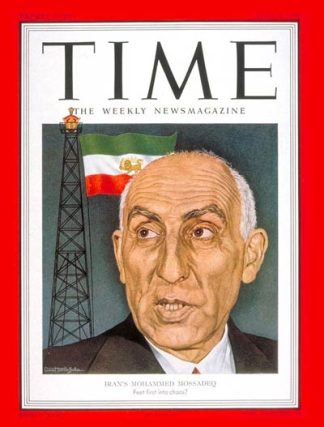
Mossadegh ran on a simple, wildly popular idea: nationalize the oil. Iran’s oil, Iran’s profits. In 1951, Iran’s parliament did exactly that, and Mossadegh became a national hero almost overnight — and Time Magazine’s Man of the Year.
Britain was furious. It organized a global boycott of Iranian oil, froze Iranian assets, and pulled its technicians out of the refineries, tanking Iran’s economy on purpose. When that wasn’t enough, Britain’s intelligence service, MI6, started quietly plotting to remove Mossadegh from power entirely.
There was just one problem: Britain couldn’t do it alone. It needed America.
Selling the Coup as a Cold War Necessity
Initially, the U.S. under President Truman wasn’t interested — nationalizing your own natural resources isn’t exactly evidence of a communist threat, and Truman’s administration was, at least in principle, uneasy about openly toppling elected governments.
But two things changed. First, Dwight Eisenhower became president in 1953, and his administration was far more willing to use covert action as a Cold War tool. Second, British intelligence reframed the entire pitch: this was no longer about oil profits, they argued — it was about stopping Iran from falling to communism, with Mossadegh’s own coalition (which included Iran’s Communist-aligned Tudeh Party as an uneasy ally) as supposed proof.
It worked. The CIA, under director Allen Dulles, agreed to run the operation jointly with MI6. It was codenamed Operation Ajax by the CIA, and Operation Boot by the British.
The Coup Itself: Bribes, Mobs, and a Tank
The plan, led on the ground by CIA officer Kermit Roosevelt Jr. (grandson of Theodore Roosevelt), was almost shockingly low-budget and improvisational for something that would reshape a nation’s history.
The CIA funneled cash — reportedly around $1 million — to pay off Iranian military officers, politicians, clergy, and street organizers. Fake news stories were planted in Iranian newspapers to turn public opinion against Mossadegh. Mobs were paid to riot in the streets, some posing as pro-Mossadegh communists to make him look dangerous, others as royalists demanding his removal — sometimes the very same people playing both sides on different days.
The first attempt actually failed. Iran’s monarch, Shah Mohammad Reza Pahlavi
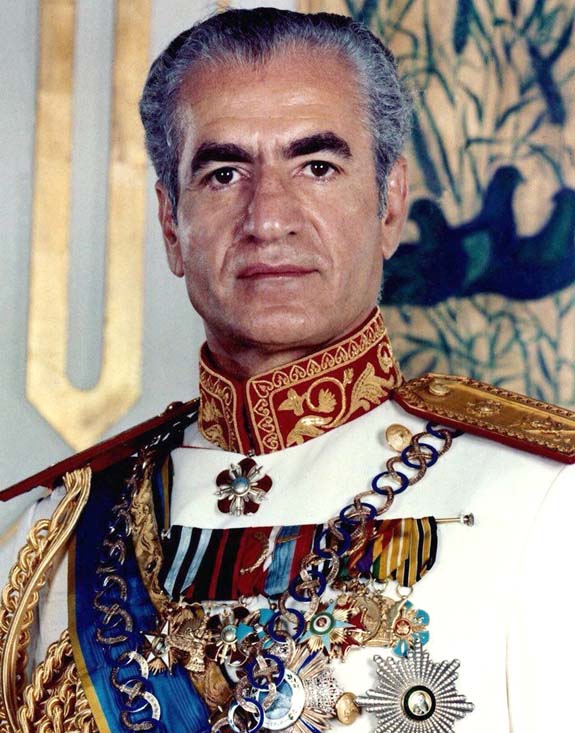
— who was working with the plotters but was famously nervous about the whole affair — fled the country when the initial plan fell apart. For a moment, it looked like Operation Ajax had collapsed entirely.
Then, days later, the paid crowds and bribed military units regrouped, seized key positions in Tehran, and stormed Mossadegh’s residence, with tanks in the street settling what politics could not.
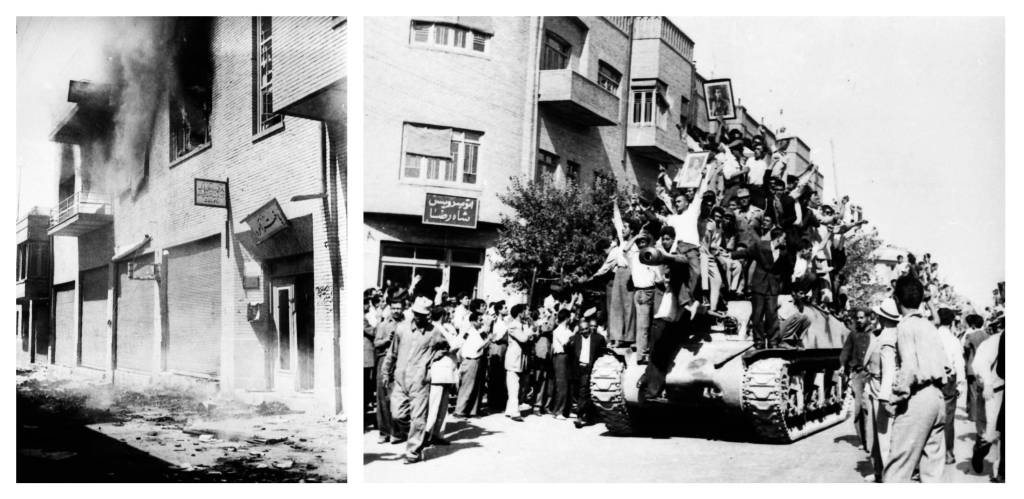
Mossadegh was arrested. The Shah, who had fled to Rome, flew back to Iran within days to reclaim his throne — now with far more absolute power than he’d had before, and a debt owed to Washington and London.
What Iran Got Instead
The Shah ruled for the next 26 years, backed heavily by the U.S. and Britain. Western oil companies got a new consortium arrangement giving them a substantial, guaranteed share of Iranian oil, this time with American companies included at the table for the first time.
But the Shah’s rule also came with SAVAK, a secret police force trained partly with CIA assistance, notorious for surveillance, torture, and suppressing dissent. Political opposition was crushed. Over the following decades, resentment simmered — not just against the Shah, but against the two Western powers everyone in Iran knew had put him back in power.
That resentment detonated in 1979. The Iranian Revolution overthrew the Shah, and radical students stormed the U.S. Embassy in Tehran, holding American diplomats hostage for 444 days. It’s genuinely difficult to explain the ferocity of that anger, and everything that followed, without going back to 1953.
The Confession Nobody Expected
For decades, the U.S. government’s official position was silence — Operation Ajax was one of the CIA’s most closely guarded secrets. Then, in 2000, U.S. Secretary of State Madeleine Albright made an extraordinary public admission: the United States, she acknowledged, had played a significant role in orchestrating the overthrow of Mossadegh, and it had been a setback for Iran’s political development.
In 2013 — sixty years after the fact — the CIA itself declassified documents formally acknowledging its role in planning and executing the coup, confirming what historians had argued for decades and what most Iranians had never doubted.
Why It Still Matters
It’s tempting to file Operation Ajax away as Cold War trivia. Iranian politics don’t let you. Every time U.S.-Iran relations flare up — nuclear negotiations, sanctions, proxy conflicts across the Middle East — 1953 gets mentioned, because for Iran it isn’t ancient history. It’s the founding grievance of the modern relationship: proof, in the eyes of many Iranians across the political spectrum, that Western powers will remove a government the moment it stops being convenient for them.
A five-day operation, run mostly through bribery and rented crowds, ended up reshaping the political identity of an entire nation — and the foreign policy of two global powers — for the next seven decades and counting.


Leave a comment