
In 2007, if you wanted to bet on the future of technology, Nokia looked like the safest bet on the planet.
The Finnish company controlled roughly 40% of every mobile phone sold on Earth — and in the smartphone category specifically, its share was closer to half the entire global market. It was outselling Motorola, Samsung, Sony Ericsson, and LG combined. It had just posted record profits. Its leadership was confident, its factories were humming, and “Nokia” was practically a synonym for “cell phone” in dozens of languages.
Six years later, in 2013, Nokia sold its entire phone business to Microsoft for $7.2 billion — a headline-grabbing number, until you realize it was a fraction of what the company had once been worth, sold off like scrap from a business that used to define an entire industry.
What happened in between is one of the fastest, most complete collapses in modern business history. And the strange part is: Nokia didn’t get blindsided. It watched the future arrive, in real time, and decided it wasn’t a threat.
The Company That Invented “Good Enough”
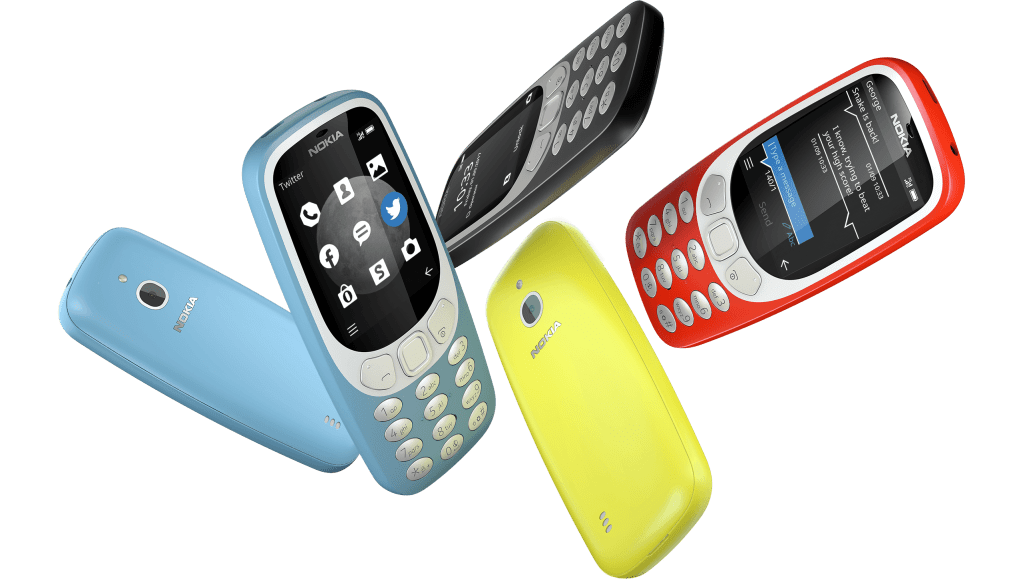
To understand how far Nokia fell, you have to understand how it won in the first place. Through the late 1990s and 2000s, Nokia built its empire on durability, simplicity, and scale. The Nokia 3310 became a cultural icon — famously indestructible, dead simple to use, and cheap enough to sell hundreds of millions of units across emerging markets in Asia, Africa, and Latin America where Nokia had almost no serious competition.
Nokia wasn’t just making phones. It was running one of the most efficient hardware supply chains on the planet, squeezing out costs and shipping volumes no competitor could match. By 2007, that machine had made it the undisputed king of a billion-phone-a-year industry.
The Day Everything Changed, and Nokia Shrugged
On January 9, 2007, Steve Jobs walked onto a stage in San Francisco and introduced the iPhone.
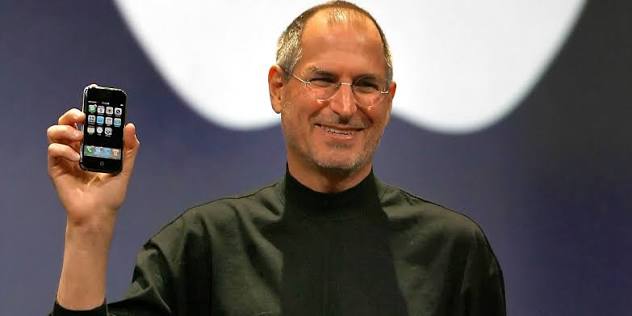
It wasn’t just a new phone — it was a fundamentally different idea of what a phone was: a touchscreen computer, with no physical keyboard, running full software applications, connected to an ecosystem Apple controlled top to bottom.
Inside Nokia, the reaction was, by most later accounts, dismissive. The iPhone was seen as expensive, impractical, and aimed at a tiny niche of tech enthusiasts. It had no physical keyboard — something Nokia’s own market research insisted customers couldn’t live without. It wasn’t rugged. Its battery life was mediocre. On paper, by the metrics Nokia had always used to judge a phone, the iPhone looked like a toy.
Nokia kept building what had always worked: durable, keyboard-equipped devices running its aging Symbian operating system — a system that had been brilliant a decade earlier but was becoming a genuine liability, slow to update and increasingly clunky to develop software for.
Winning the Old Race While Losing the New One
Here’s what makes Nokia’s story more interesting than a simple “they got disrupted” narrative: for years after the iPhone launched, Nokia was still, on paper, winning. It kept its position as the world’s top-selling phone maker until 2012, still shipping hundreds of millions of units annually, still profitable, still dominant by unit volume in developing markets.
But the market itself was quietly redefining what “winning” meant. Apple’s iPhone — and soon Google’s Android, which other manufacturers like Samsung and HTC rapidly adopted — weren’t just competing on hardware. They were building software ecosystems: app stores, developer platforms, and a device experience that felt like it was constantly improving through updates, not just new hardware releases.
Nokia’s Symbian system couldn’t keep pace, and the company’s internal culture reportedly made it worse. Later insider accounts and a leaked internal memo described a company where engineering teams competed against each other rather than collaborating, where bad news was softened on its way up the chain of command, and where the sheer scale of Nokia’s past success made its leadership slow to believe it could really be in danger. There’s even a term for it now, coined from Nokia’s own internal memo: the “burning platform” — a description of a company standing on a structure that was already on fire, while insisting it wasn’t.
The Windows Phone Gamble
By 2011, Nokia’s new CEO, Stephen Elop — notably, a former Microsoft executive — made a dramatic bet: Nokia would abandon Symbian and build its future entirely around Microsoft’s Windows Phone operating system, rather than adopting Android like most of its rivals.
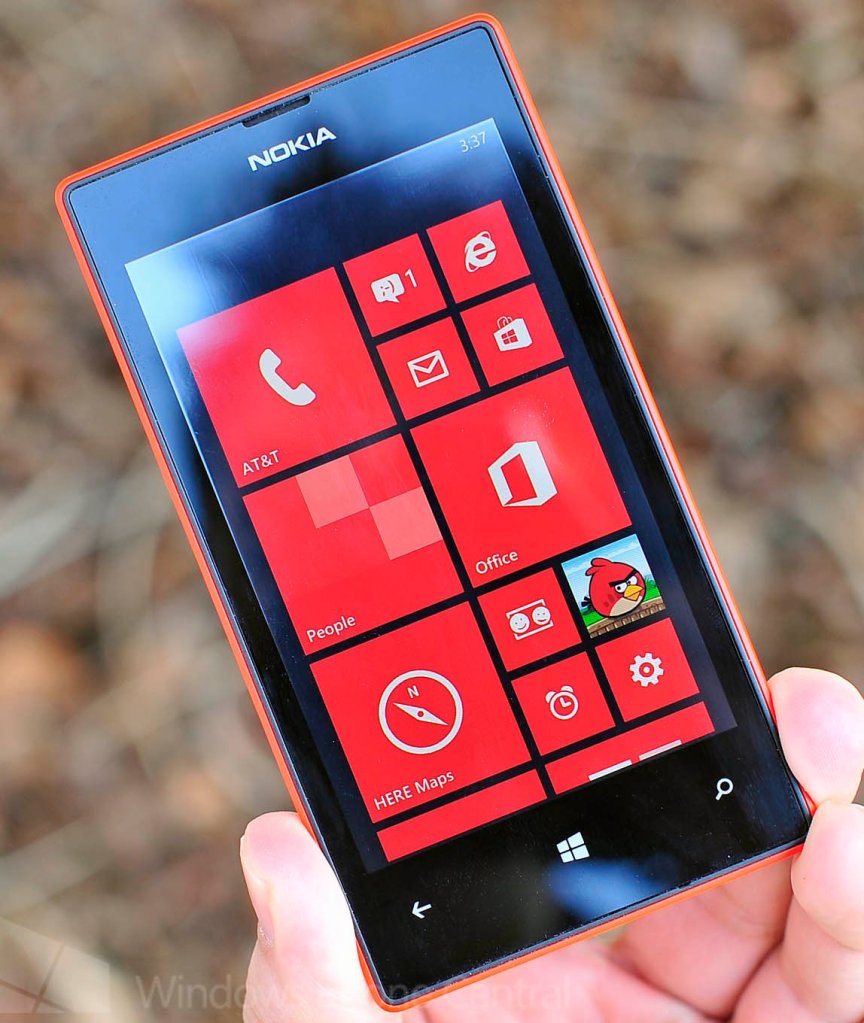
It was a bold, contrarian strategy, and it failed. Windows Phone never built the developer ecosystem or app library that iOS and Android had, and consumers noticed. Nokia’s phones running Windows were, by most reviews, well-built — but they were fighting for relevance in an app economy where two platforms had already won.
By 2013, Nokia’s global smartphone market share, which had been around 50% just six years earlier, had collapsed to roughly 3%.
The Sale
In September 2013, Microsoft announced it would acquire Nokia’s mobile phone business for $7.2 billion. It was framed publicly as a strategic partnership deepening — but for anyone who had watched Nokia’s rise, it read as something closer to a eulogy. The company that had once outsold its four biggest rivals combined was now a division being absorbed by someone else’s operating system.
Microsoft’s own attempt to revive the brand went nowhere either; within a few years it wrote off most of the acquisition’s value and largely exited the phone business altogether.
The Real Lesson Isn’t “They Missed the iPhone”
It’s tempting to tell this story as “Nokia didn’t see the iPhone coming.” That’s not quite true — Nokia saw it. Its engineers reportedly experimented with touchscreens years earlier. What Nokia missed wasn’t the technology; it was the category. Leadership kept judging the iPhone by the rules of the business Nokia already dominated — durability, battery life, keyboard usability, manufacturing efficiency — instead of recognizing that Apple and Google were quietly building a completely different business: not phones, but platforms.
That’s the part that makes Nokia’s collapse such a favorite case study in business schools today. It isn’t a story about a company that was lazy, or poorly run, or blindsided by bad luck. It’s a story about a company that was excellent at its business — right up until the definition of that business changed underneath it, and nobody with the power to act was willing to admit it in time.
Half the market. Six years. Gone.


Leave a comment