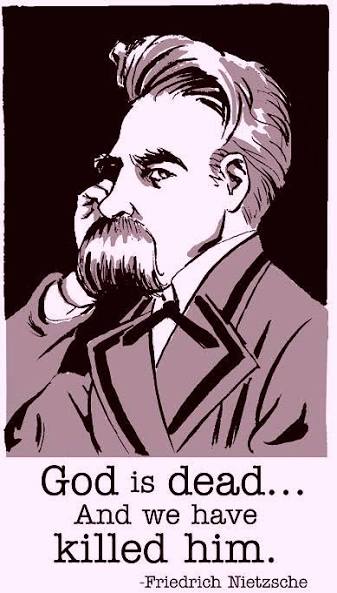
Few lines in philosophy have been more quoted, more printed on t-shirts, and more misunderstood than this one: “God is dead.”
People hear it and assume it’s a triumphant slogan — an atheist’s mic drop, a philosopher popping champagne over the death of religion. Case closed, superstition defeated, humanity liberated.
Nietzsche would have been horrified by that reading. Because “God is dead” wasn’t a celebration. It was a warning. And once you understand what he was actually warning about, the phrase stops sounding edgy and starts sounding unsettlingly relevant.
He Wasn’t Talking About Theology
First, a correction that changes everything: Nietzsche wasn’t making a metaphysical claim about whether a deity exists. He wasn’t arguing like a debate-club atheist, stacking up evidence against divine creation. He wasn’t even primarily talking about religion in the narrow sense.
What he meant was something closer to a cultural diagnosis: in a modernizing, industrializing, science-driven Europe, the shared belief system that had anchored Western meaning, morality, and purpose for nearly two thousand years was quietly dissolving. Not through some dramatic war on faith — just through the slow erosion of relevance. Science was explaining what religion used to explain. Nation-states were replacing the church as the center of public life. People still went through the motions, but the deep, unquestioned certainty was gone.
Nietzsche’s point wasn’t “God doesn’t exist, therefore we win.” His point was: “We have killed the thing that gave our lives a foundation — and most of us haven’t noticed yet.”
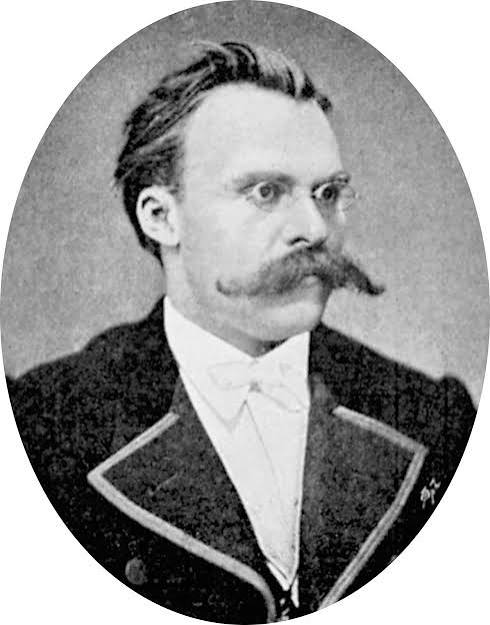
The Parable Everyone Forgets to Read Properly
The famous line comes from a parable in The Gay Science, where a madman runs into a marketplace shouting that God is dead — and that “we” killed him. The crowd laughs at him. He’s not comforted by this. He’s horrified.
Read the actual scene, and it’s not smug or celebratory at all. The madman asks a string of increasingly frantic questions: How did we do this? How do we wipe away an entire horizon? Where are we moving to now that we’ve unchained the earth from its sun?
This is not the tone of a man throwing a party. It’s the tone of someone watching a ship’s anchor snap and realizing the crew doesn’t yet understand they’re adrift.
So What Was He Actually Worried About?
Here’s the part that gets left out of the t-shirt version: Nietzsche believed that for centuries, the concept of God had quietly been doing a lot of structural work in Western civilization. It wasn’t just about the afterlife — it was the thing morality was built on top of. Good and evil, right and wrong, purpose, justice, meaning — all of it had been resting on a religious foundation, even for people who weren’t especially devout.
Once that foundation is gone, Nietzsche argued, you don’t get to keep the moral conclusions without the premise that justified them. You can’t casually retain “be kind, be honest, life has purpose” while discarding the entire framework those ideas were built on — not without doing the hard work of rebuilding morality from scratch.
His fear was that most people wouldn’t do that work. They’d just keep living as though the old foundation were still there, coasting on inherited values without realizing the ground underneath had already given way. And eventually, when enough people noticed the gap, you’d get one of two things: a dangerous vacuum where anything goes, or new, more dangerous replacement systems rushing in to fill the void — ideologies happy to hand people a new absolute certainty to cling to.
If that sounds like it’s describing the 20th century, that’s not a coincidence. Many scholars read Nietzsche’s warning as an eerily early diagnosis of the conditions that allowed totalitarian ideologies to seize the moral vacancy he predicted — movements that offered people a new god-shaped certainty to fill the hole where the old one used to be.
Not Nihilism — A Warning Against Nihilism
This is the biggest misreading of all. People assume Nietzsche was a nihilist — someone who believed nothing matters and nothing has value. It’s almost the opposite. Nietzsche was terrified of nihilism. He saw it coming and was trying to warn Europe about it, the way someone might warn you a bridge is about to collapse — not because they want it to collapse, but because they can see the cracks nobody else is looking at.
His actual proposal wasn’t “give up, nothing matters.” It was closer to: since the old, inherited foundation for meaning is gone, human beings now have the burden — and the freedom — to build new values themselves, consciously and deliberately, rather than drifting into either despair or dangerous new dogmas.
That’s a much harder, much less quotable idea than “God is dead.” Which is probably exactly why the harder version never made it onto the t-shirts.
Why This Still Matters
You don’t need to be religious, or irreligious, for this to land. Swap “God” for any inherited system of meaning — a shared national identity, a set of cultural values, an ideology people stopped consciously believing in but never replaced. Nietzsche’s real question wasn’t about churches. It was about what happens to a civilization — or a person — when the thing quietly holding their values together disappears, and nobody’s built anything to take its place.
That’s not a slogan. That’s a live question. It just happens to be 150 years old.
Curious Context is about looking past the headline and finding the story underneath it. Got a topic you want unpacked next? Send it our way.


Leave a comment