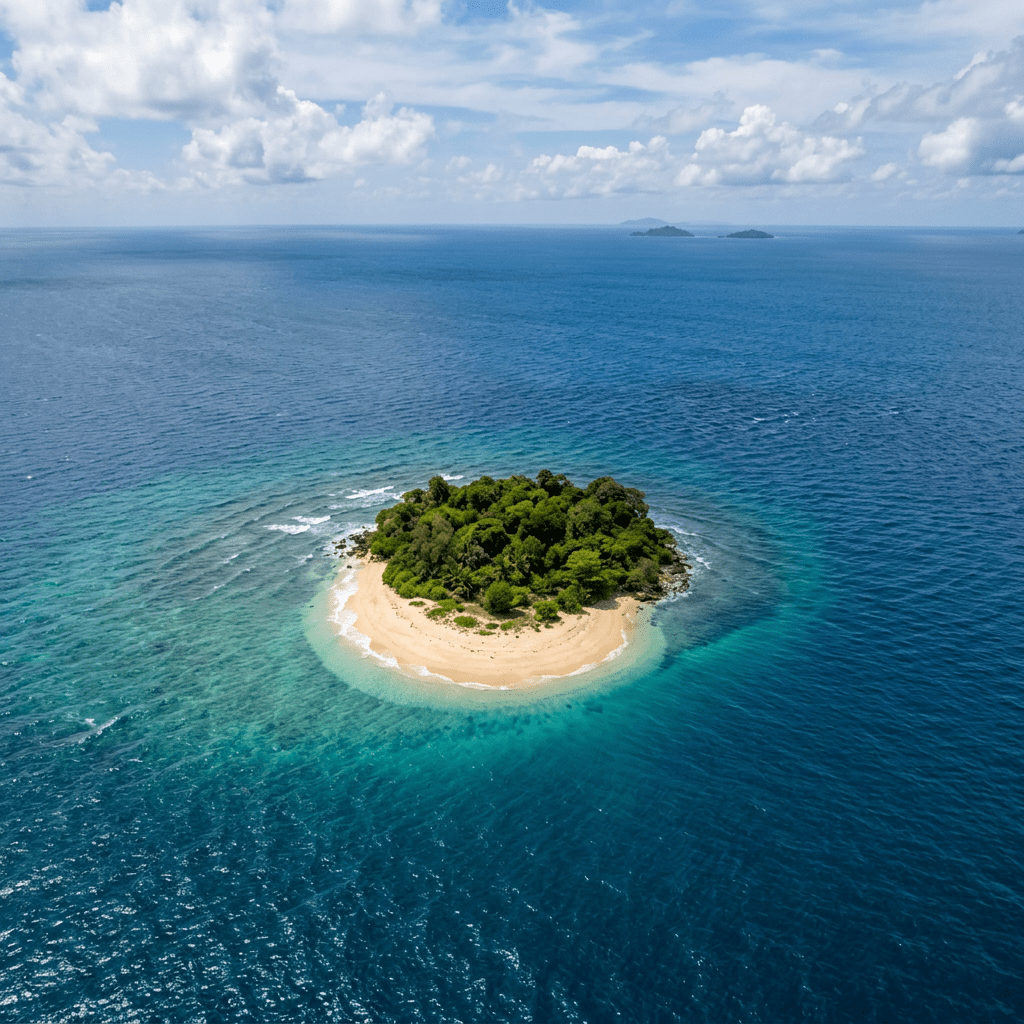
A tiny island in the middle of the ocean can look almost meaningless.
No major cities. No large population. Sometimes, barely enough land to stand on.
Yet countries have spent decades arguing over, occupying, militarizing, and even risking confrontation over places that seem almost too small to matter.
So why?
The simple answer is that the land itself is often not the real prize.
The real prize can be the sea around it, the resources beneath that sea, the military position it provides, the trade routes nearby, and what controlling it says about a country’s power.
And this is where geography becomes geopolitics.
A small piece of land can create a much bigger area of control
Imagine a country owns a small island far from its mainland.
At first, that doesn’t sound particularly valuable.
But under international maritime law, land territory can generate maritime zones around it. The United Nations Convention on the Law of the Sea (UNCLOS) gives coastal states sovereignty over a territorial sea extending up to 12 nautical miles from their baselines. It also establishes wider maritime zones, including an Exclusive Economic Zone (EEZ) that can extend up to 200 nautical miles in appropriate circumstances. United Nations
That changes the calculation completely.
A few square kilometers of land can potentially be connected to a vastly larger area of ocean.
And the ocean isn’t empty.
It can contain:
Fishing grounds
Oil and natural gas
Shipping routes
Undersea infrastructure
Strategic military positions
Other valuable marine resources
The United Nations notes that for many small island states, their EEZ is vastly larger than their land area, making the surrounding ocean an essential economic asset. United Nations
So when countries fight over a tiny island, they may actually be arguing over a much larger space surrounding it.
1. Geography can be more valuable than size
One of the most important rules of geopolitics is:
A place doesn’t have to be big to be strategically important.
Consider a small island sitting near an important shipping route.
It might allow a country to:
Monitor maritime traffic
Build radar or surveillance facilities
Support military operations
Protect nearby shipping
Project power farther from its mainland
The location matters more than the size.
This is why seemingly insignificant islands can become important pieces on a much larger geopolitical chessboard.
2. The ocean around the island can be worth far more than the island itself
This is perhaps the biggest reason behind modern maritime disputes.
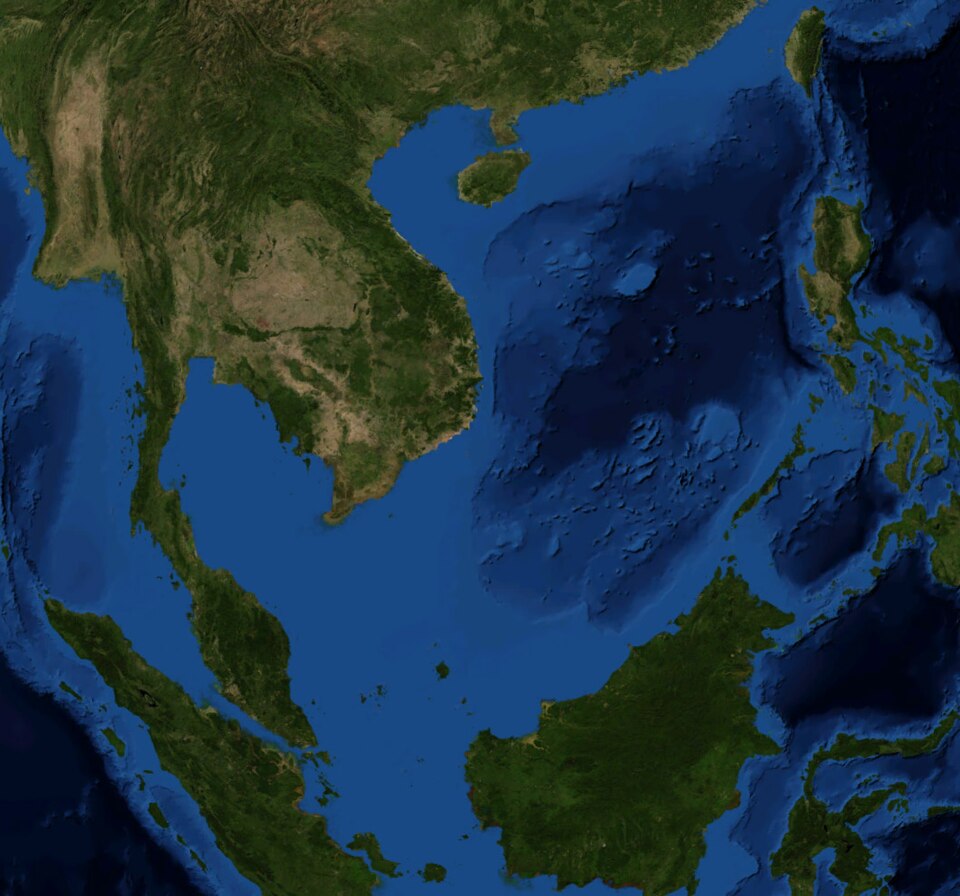
Consider the South China Sea.
Many of the disputed features there are tiny, remote and largely uninhabited. Yet several countries claim different islands, reefs and maritime areas.
Why?
Because the region contains important fishing grounds, potential energy resources and one of the world’s major trade corridors. The Council on Foreign Relations describes the South China Sea as a strategic waterway through which more than $5 trillion in trade passes annually. Council on Foreign Relations
That makes a tiny reef potentially much more significant than it appears on a map.
The island becomes a geopolitical foothold.
3. Resources can turn rocks into valuable territory
Countries aren’t only interested in what they can build on an island.
They’re also interested in what might be beneath the surrounding water.
Potential resources include:
Fish → energy resources → minerals → seabed resources
For countries with large populations or growing economies, access to these resources can have significant economic value.
The South China Sea illustrates this particularly well. Its waters are important for fishing and are believed to contain significant oil and natural-gas resources. Council on Foreign Relations
This creates an interesting situation:
A piece of land can be worth millions—or potentially billions—not because of the land itself, but because of what lies around it.
4. Military strategy changes everything
Now imagine that the tiny island sits close to an important coastline.
Suddenly, it becomes a potential military position.
A country might use it for:
Radar
Surveillance
Airfields
Missile systems
Naval facilities
Coast guard operations
Communications
Even without a large permanent population, the island can help a country monitor a much larger area.
This is one reason why some disputed territories have been transformed into military outposts.
In the South China Sea, for example, China has transformed several reefs and other features into artificial islands and built military-grade facilities on some of them. Council on Foreign Relations
The physical size of the original feature was small.
Its strategic importance wasn’t.
5. Trade routes make certain locations extremely valuable
Now zoom out from the island.
Look at the surrounding map.
Is it close to:
A major shipping lane?
A narrow strait?
A major port?
An important ocean passage?
A route connecting two major economic regions?
If the answer is yes, its value increases dramatically.
This is why geography and economics are so closely connected.
A country doesn’t necessarily need to control an entire ocean.
Sometimes controlling—or simply having a strategic presence near—one important location can give it influence over a much larger system.
Think about the world’s maritime chokepoints.
The Strait of Hormuz, for example, is extremely important because enormous volumes of energy shipments pass through the surrounding region.
The lesson is broader than any single dispute:
In geopolitics, controlling the right location can matter more than controlling a large amount of territory.
6. But there is another reason: sovereignty
Here’s where things get more complicated.
Sometimes a country isn’t interested only in economic or military benefits.
It genuinely believes:
“This territory belongs to us.”
Territorial claims are connected to history, national identity, treaties, maps, previous occupation and domestic politics.
Once a territory becomes part of a country’s national narrative, giving it up can become politically difficult.
Leaders may be accused of:
Giving away national territory
Weakening the country
Betraying historical claims
Allowing foreign powers to take advantage
So even when the economic value of a tiny territory is uncertain, its symbolic value can be enormous.
7. This is why tiny islands can become major diplomatic problems
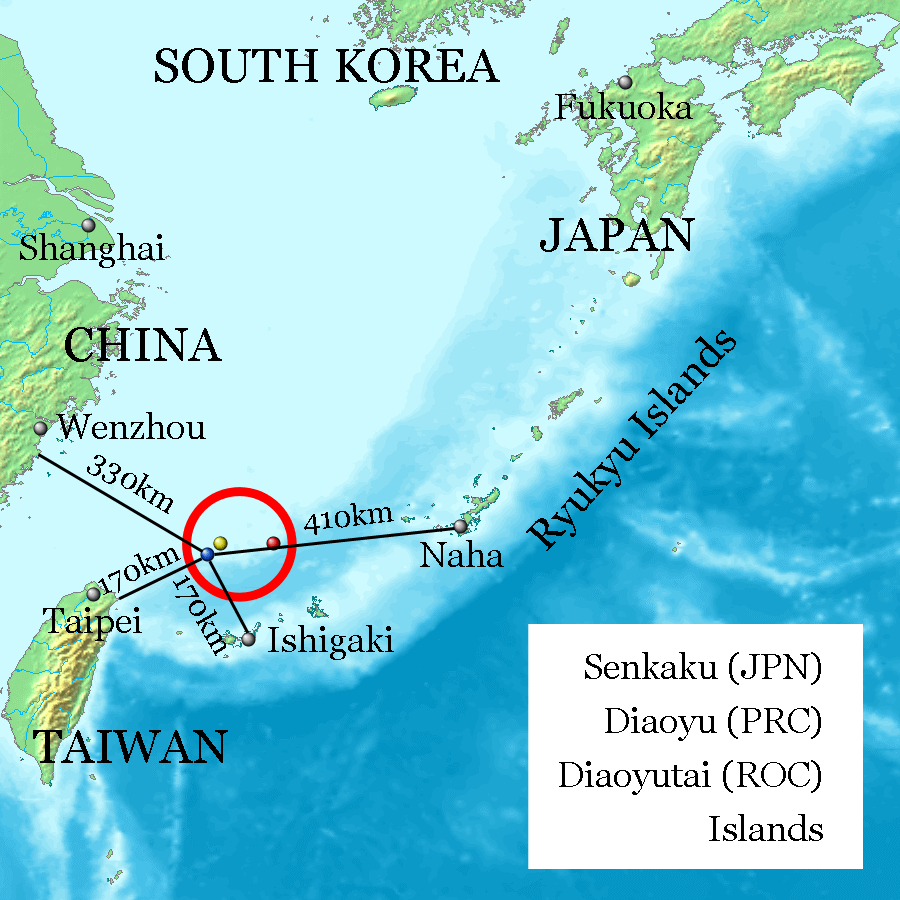
Take the Senkaku Islands, known as the Diaoyu Islands in China.
They are a group of small, uninhabited islands in the East China Sea.
China and Japan dispute sovereignty over them, and the issue has broader implications because it sits within the complicated strategic relationship between the two countries. Council on Foreign Relations
The islands themselves aren’t comparable to a major city in economic size.
But their location and the surrounding maritime claims make them strategically significant.
This is the pattern we see repeatedly:
Small territory
↓
Maritime claims
↓
Resources + strategic position
↓
National interests
↓
Geopolitical competition
8. Not every rock creates the same rights
There is an important detail that is often missed when people talk about islands.
International maritime law does not treat every piece of land equally.
Under UNCLOS, the legal status of a feature matters.
For example, certain rocks that cannot sustain human habitation or economic life of their own do not generate the same maritime entitlements as full-fledged islands. United Nations
That means countries can fight over something that looks like a simple rock—but the legal classification of that rock can have enormous consequences.
This is one reason maritime territorial disputes can become so complicated.
The argument isn’t always simply:
“Who owns this island?”
It can also become:
“What exactly is this feature under international law, and what maritime rights can it generate?”
9. Small islands can also become symbols of national power
There is another layer that is harder to measure.
Territory represents sovereignty.
If a country controls a disputed island, it demonstrates that it is capable of maintaining a physical presence there.
That can send a message to neighboring countries:
“We are here, and we intend to stay.”
This is why coast guard patrols, flags, military facilities and civilian activity can become politically significant even when the territory itself is tiny.
The South China Sea demonstrates this dynamic particularly clearly, with multiple countries asserting overlapping claims and maintaining different forms of presence in disputed areas. Council on Foreign Relations
10. The real battle is often over the map
This is perhaps the most fascinating part.
When you look at a disputed island on a map, you might see:
one tiny dot.
But governments may see:
a strategic position + maritime territory + resources + trade routes + military access + national sovereignty.
That’s why a seemingly insignificant island can become part of a much bigger geopolitical struggle.
The island is simply the anchor point.
The real competition may extend hundreds of kilometers beyond it.
So, why do countries care so much?
Because land is rarely just land in geopolitics.
A tiny island can provide:
🌊 Maritime influence
Access to surrounding waters and maritime zones.
🐟 Resources
Fishing grounds and potentially energy or other marine resources.
⚓ Trade advantages
Proximity to important shipping routes and chokepoints.
🛰️ Military advantages
A position for surveillance, communications or military operations.
🗺️ Strategic geography
A foothold in an important part of the world.
🇺🇳 Sovereignty
A claim to territory can reinforce a country’s control and legal position.
🏳️ National identity
Territory can become a symbol of national pride and historical legitimacy.
The bigger lesson
The next time you see a map showing a dispute over an island that looks almost meaningless, don’t ask:
“Why would anyone fight over that tiny piece of land?”
Ask:
“What’s around it?”
Look at the shipping routes.
Look at the coastline.
Look at the resources.
Look at the surrounding waters.
Look at the military bases.
Look at who claims it—and why.
Because in geopolitics, the smallest piece on the map can sometimes reveal the biggest struggle for power.


Leave a comment